


Scrub Typhus:
Scrub typhus is emerging as one of the most concerning infectious diseases across India, especially in Andhra Pradesh. Despite being caused by something as tiny as an unseen chigger (mite larva), the disease can lead to life-threatening complications when not recognised early. This guide simplifies everything you need to know—how it spreads, how to identify it, why cases are rising, and what to do to stay safe.
Understanding Scrub Typhus: An Urgent Health Concern
Scrub typhus is caused by the bacterium Orientia tsutsugamushi, transmitted through the bite of infected chiggers—microscopic larvae found in bushy, grassy, and humid environments. These bites are painless and often unnoticed, making the infection difficult to detect early.
Once inside the body, the bacteria multiply rapidly, affecting major organs such as the lungs, liver, kidneys, and even the brain. What begins as a simple fever can escalate into a medical emergency if ignored.
Why Scrub Typhus Is a Serious Threat
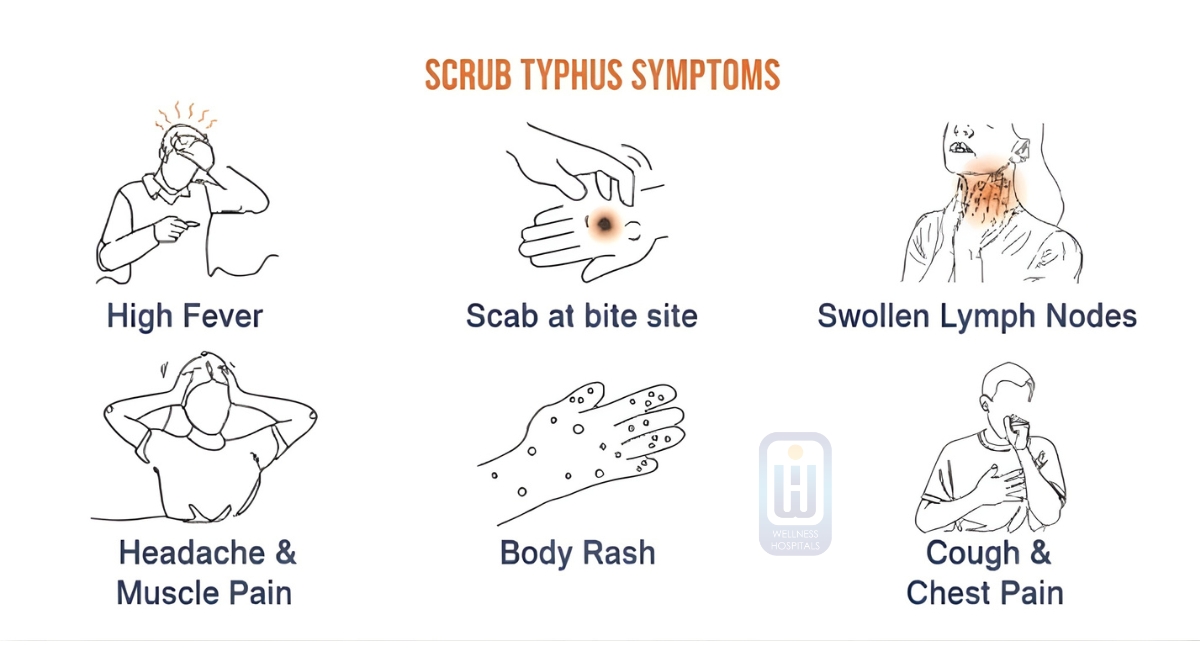
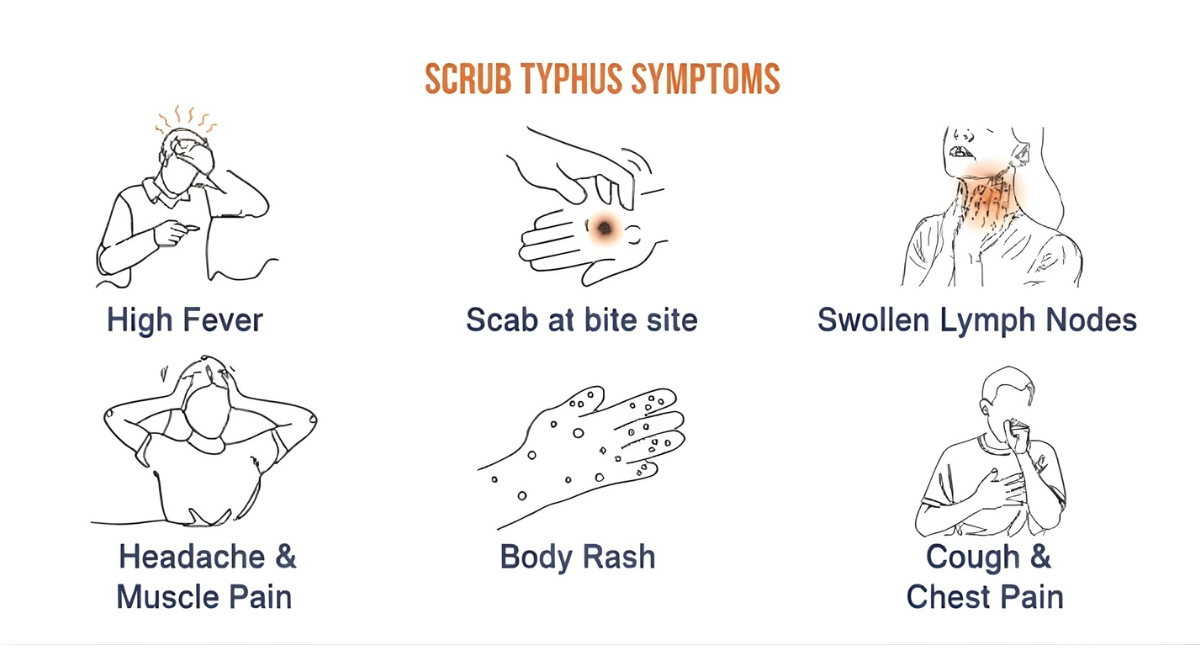
“Scrub typhus symptoms show high fever, eschar scab, body rash, swollen lymph nodes, and chest pain.”
The early symptoms of scrub typhus look similar to dengue, malaria, or the flu. Many people treat it as a “regular fever” at home. But unlike common viral fevers, scrub typhus can progress fast if untreated.
Common early symptoms include:
- High fever with chills
- Severe headache
- Body and muscle aches
- Extreme tiredness
- General discomfort
Progressive symptoms may include:
- Rash on the trunk and limbs
- Swelling of lymph nodes
- Shortness of breath
- Persistent cough
- Abdominal pain
- Confusion or drowsiness
- Eye redness
- Nausea or vomiting
The Most Important Clue: The Eschar
A distinct dark, scab-like lesion—called an eschar—appears at the bite site in about half of the cases. It is painless and often hidden in areas like:
- Underarms
- Groin
- Waistline
- Neck folds
Noticing it early can significantly speed up diagnosis and treatment.
How Scrub Typhus Spreads
Chiggers thrive in:
- Bushy areas
- Farmlands
- Tall grass
- Forest edges
- Humid environments
They are most active during the monsoon and cooler seasons. When they bite, they inject bacteria directly into the bloodstream.
The disease is predominantly found in the Tsutsugamushi Triangle—covering India, Southeast Asia, and parts of Australia. India, especially Andhra Pradesh, has seen an alarming rise in cases in recent years.
Scrub Typhus Surge in Andhra Pradesh: A Growing Concern
Health reports from 2025 show district-wise increases in cases, with high numbers in:
- Chittoor
- Kakinada
- Visakhapatnam
- YSR Kadapa
- Nellore
- Anantapur
Why Cases Are Increasing
Several factors contribute to this rise:
- Monsoon-related vegetation growth, attracting chiggers
- High exposure among farmers and outdoor workers
- Delayed diagnosis, often mistaken for dengue or viral fever
- Limited awareness of symptoms and eschar
- Improved surveillance, leading to better detection
The disease is no longer sporadic—it’s now a significant public health challenge.
Diagnosis: How Doctors Confirm Scrub Typhus
Doctors rely on:
- Clinical symptoms
- History of outdoor exposure
- Presence of eschar
Laboratory tests include:
- IgM ELISA (most commonly used)
- IFA (gold standard)
- PCR (detects bacterial DNA in early stages)
Blood tests usually show low platelets, abnormal liver enzymes, and altered kidney function.
Treatment: Why Early Antibiotics Save Lives
Scrub typhus responds quickly to antibiotics, especially when started early.
First-line treatment
- Doxycycline 100 mg twice daily for 7 days
Patients typically see improvement within 24–48 hours.
Alternatives
- Azithromycin (ideal for pregnant women and children)
- Chloramphenicol (rarely used due to side effects)
Severe cases may require:
- ICU admission
- Oxygen or ventilator support
- Dialysis (for kidney failure)
- IV fluids and monitoring
Delayed treatment increases the risk of:
- ARDS
- Organ failure
- Septic shock
- Multi-organ dysfunction
Early intervention prevents more than 90% of complications.
How to Protect Yourself: Preventive Measures
Since there is no vaccine, prevention is crucial.
Personal Protection
- Wear full-sleeved clothing and full-length pants
- Use DEET-based repellents on skin
- Use permethrin spray on clothes
- Avoid sitting on grass during outdoor work
- Take a bath immediately after returning indoors
Environmental Safety
- Keep the surroundings free of tall grass
- Trim bushes regularly
- Maintain clean farmland borders
- Keep animal sheds away from living areas
For Farmers
- Wear boots and gloves
- Avoid lying directly on the ground
- Use ground mats while working
FAQs
1. What causes scrub typhus?
It is caused by the bacteria Orientia tsutsugamushi, transmitted through infected chigger bites.
2. How can I tell if my fever is scrub typhus and not dengue?
An eschar, persistent fever, and outdoor exposure in grassy areas strongly suggest scrub typhus. Blood tests confirm diagnosis.
3. Is scrub typhus dangerous?
Yes. If untreated, it can cause organ failure, respiratory distress, or even death.
4. How long does treatment take?
Most patients recover within 7 days of antibiotic therapy.
5. Is there a vaccine?
No vaccine exists currently; prevention through protective measures is essential.
Conclusion
Scrub typhus is a rapidly rising health concern that demands immediate awareness and action. A small chigger bite can lead to severe complications if ignored. Recognising symptoms early, seeking medical help within 48–72 hours of fever, and following preventive steps can protect you and your family.
Timely diagnosis and antibiotics make scrub typhus highly treatable—delay is the real danger.
Disclaimer
This blog is for educational and informational purposes only. It is not a substitute for professional medical advice, diagnosis, or treatment. Always consult a qualified healthcare provider for any health concerns.