


An imaging-led approach to understanding fetal development during pregnancy
By Dr Jambula Vasavi Reddy
Consultant Radiologist & Fetal Medicine Specialist | Wellness Hospitals, Nizamabad.
Introduction
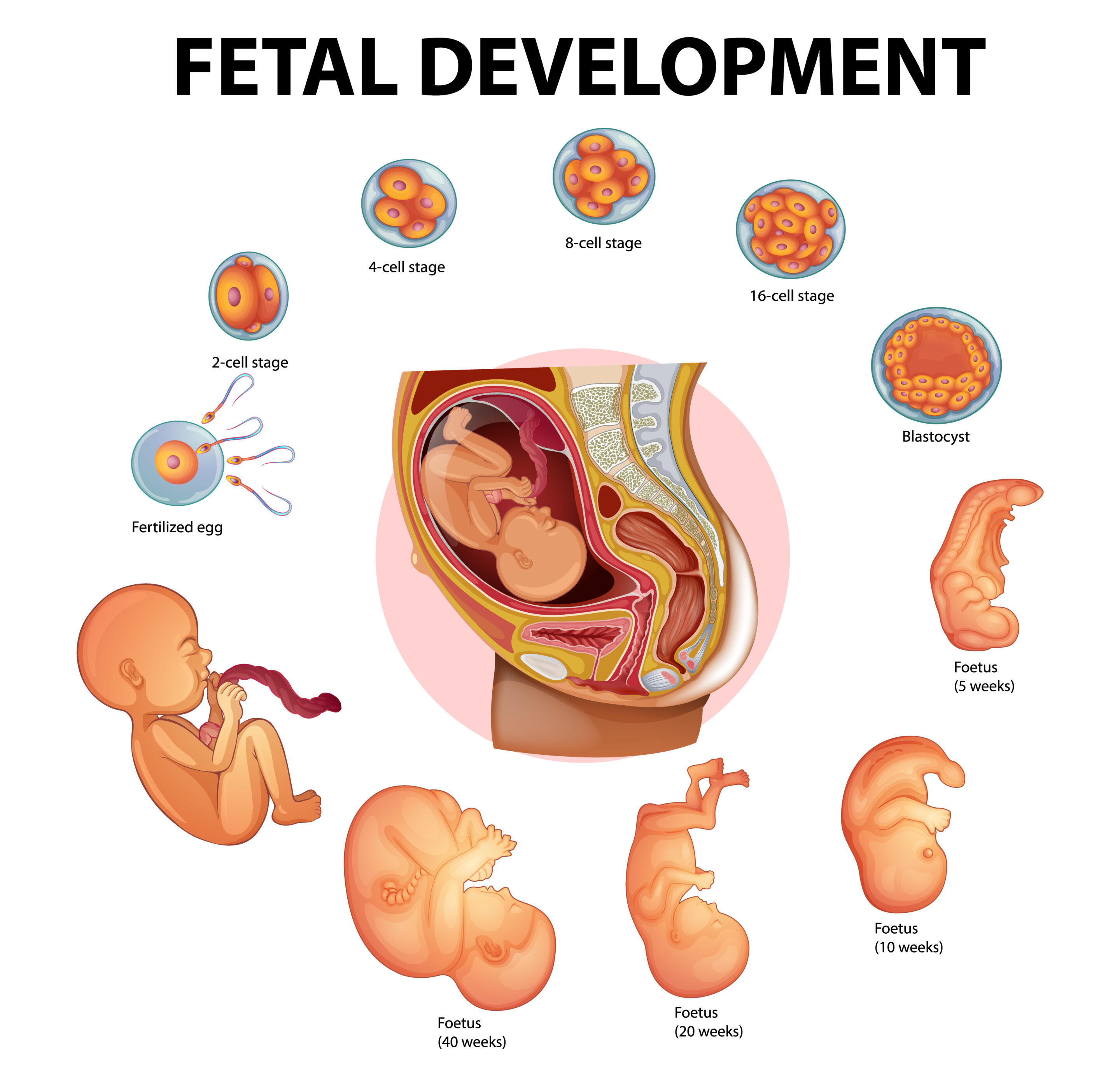
Stages of Human Embryonic Development Illustration.
I am Dr Jambula Vasavi Reddy, a consultant radiologist with focused expertise in fetal medicine and prenatal imaging. My role during pregnancy is to carefully evaluate fetal scans and provide accurate imaging-based insights that help understand how a baby is growing and developing at each stage.
In my daily practice, imaging is not used to create fear or assumptions. It is used to bring clarity. Ultrasound scans allow me to assess fetal development in real time—examining organ formation, growth patterns, placental function, and overall fetal well-being. Through this article, I aim to share how fetal medicine works from a radiologist’s perspective and explain the role of prenatal imaging and screening in supporting healthy pregnancies, especially for families in and around Nizamabad.
Understanding Fetal Medicine from an Imaging Perspective
From my perspective as a radiologist, fetal medicine begins with precision in imaging. Every fetal scan is a structured medical evaluation, whether performed early in pregnancy or during detailed anomaly assessment later on.
When I interpret a fetal scan, I focus on:
- Gestational age correlation and growth trends
- Structural development of major organs
- Placental position and functional assessment
- Amniotic fluid volume and fetal environment
Fetal medicine imaging is not a single snapshot. It is an analytical process where each image is interpreted in a clinical context, considering maternal history, gestational milestones, and expected developmental patterns. This approach ensures that imaging findings are clinically meaningful rather than isolated observations.
Prenatal Screening and Diagnostic Imaging
Prenatal screening is a systematic process that combines clinical information with imaging findings. From a radiologist’s role, my responsibility is to identify imaging markers that may require closer observation or follow-up.
Prenatal imaging assessment commonly includes:
- First-trimester ultrasound markers for early development
- Second-trimester targeted anomaly scans
- Growth monitoring and Doppler studies in later stages
Imaging does not function independently. I work closely with obstetric teams, providing detailed reports that guide clinical decisions. This collaboration ensures that prenatal screening remains balanced—supportive rather than alarming—and focused on timely, appropriate care.
Role of Advanced Fetal Ultrasound Scans
Advanced fetal ultrasound scans form the core of fetal medicine evaluation. High-resolution imaging allows me to study fetal anatomy in detail, including the brain, heart, spine, kidneys, and skeletal structures.
Through these scans, I aim to:
- Identify structural variations early
- Monitor organ development across gestation
- Distinguish normal developmental variants from significant findings
Fetal scans are dynamic. As the fetus grows, imaging interpretation evolves. Consistency, standardised protocols, and experience are essential—especially when monitoring growth trends or reassessing findings observed in earlier scans.
Imaging in High-Risk Pregnancy Monitoring
Certain pregnancies require closer imaging follow-up due to maternal, fetal, or placental factors. In such cases, my focus shifts from isolated findings to trend-based evaluation.
More frequent fetal scans may be required when there is:
- Maternal medical history influencing pregnancy
- Previous pregnancy complications
- Concerns related to fetal growth patterns
- Multiple pregnancies
In these situations, imaging helps assess blood flow patterns, growth velocity, and fetal adaptation. The purpose is not to label a pregnancy as high risk, but to provide timely information that supports appropriate monitoring and planning.
Collaboration Between Radiology and Obstetric Care
Fetal medicine functions best through collaboration. As a radiologist, my role is to provide objective imaging interpretation, accurate measurements, and clear documentation.
Obstetricians integrate these imaging findings with clinical care, counselling, and pregnancy management decisions. Regular communication between imaging specialists and treating clinicians ensures that fetal scans contribute meaningfully to pregnancy care rather than remaining as standalone reports.
FAQ:
Common Questions Parents Ask During Prenatal Scans.
During fetal scans, parents often look for reassurance and clarity. From my experience, these are some of the most common concerns I address.
1. What exactly are you checking during this scan?
I assess fetal anatomy, growth patterns, organ development, placental position, and overall fetal well-being based on gestational age.
2. If something looks different, does it mean there is a problem?”
Not always. Many findings are normal developmental variations. Imaging helps determine whether a finding needs observation, follow-up, or correlation.
3. Why do some scans take longer than others?”
Certain evaluations require a detailed assessment of specific organs or blood flow. Scan duration depends on gestational age, fetal position, and clinical indication.
4. Why are follow-up scans recommended even when things look normal?”
Some aspects of growth and development can only be assessed over time. Follow-up scans help confirm normal progression and provide reassurance.
Conclusion
Prenatal imaging has become an essential part of modern pregnancy care by enabling early, structured, and informed evaluation of fetal development. From a radiologist-led fetal medicine perspective, imaging is about understanding physiology, supporting clinical decisions, and guiding care with accuracy and responsibility.
When fetal scans are performed thoughtfully and interpreted within a clinical context, they serve as a reliable tool in supporting healthy pregnancies and informed care.
Author Attribution:
Dr Jambula Vasavi Reddy
Consultant Radiologist & Fetal Medicine Specialist
Wellness Hospitals, Nizamabad.