Varicose Veins Surgery Cost in Hyderabad
Varicose veins are more than a cosmetic worry. The aching, swelling and heavy legs they cause can wear you down, and left alone they can lead to skin changes and sores. If your doctor has advised surgery, you probably want to know what it costs, how it is done, and how long recovery takes. This page gives you the price at Wellness Hospitals, explains the treatments in plain words, and answers the questions patients ask most.
Varicose veins surgery cost at a glance
- One leg: ₹80,000 – ₹1,20,000
- Both legs: ₹1,20,000 – ₹1,60,000
- Sclerotherapy (injection treatment): please ask our advisor
- Doppler ultrasound scan of the leg veins: ₹9,000
What decides the price
- One leg or both legs
- How many veins and how long a stretch of vein is treated
- The technique your surgeon chooses
- Tests before surgery, and the length of your stay
Varicose veins surgery cost in Hyderabad at Wellness Hospitals
| Procedure | Price | Note |
|---|---|---|
| Varicose veins surgery, one leg | ₹80,000 – ₹1,20,000 | Please ask our advisor which technique your estimate covers |
| Varicose veins surgery, both legs | ₹1,20,000 – ₹1,60,000 | Please ask our advisor which technique your estimate covers |
| Sclerotherapy (injection treatment) | Ask our advisor | Priced after your surgeon's evaluation |
| Doppler ultrasound scan of the leg veins | ₹9,000 | Please ask our advisor whether it is included in your surgery estimate |
*Approximate costs. The final cost may vary for each patient.
Please note: the prices above are a guide, not a fixed quote. Where your price falls within a range depends on factors such as how many veins and how much of each vein is treated, the technique your surgeon chooses, any earlier treatment, your tests, the length of your stay, other health conditions and any complications. Your final bill may differ if extra tests, medicines or days in hospital are needed. If your surgeon changes the plan after evaluation, the cost will be decided accordingly. Please contact our advisor when you ask for an estimate, and ask for it in writing before surgery.
What affects the cost of varicose veins surgery?
One leg or both legs. Treating both legs takes longer and costs more, which is why there are two prices.
How many veins are treated. Treating a single main vein is a smaller operation than treating several veins, or a long stretch of a vein.
The technique. Surgeons treat varicose veins in different ways, such as with a laser or radio waves passed through a thin tube, with injections, or by tying off and removing the vein. Your surgeon chooses the one that suits your veins. Please ask our advisor which technique your estimate covers.
The size and condition of your veins. A very large or twisted vein, a vein with a clot, or skin that has already changed or broken down can make treatment harder.
Tests before surgery. A Doppler ultrasound scan maps which veins are leaking, and blood tests help check that you are fit for surgery. Ask which are included in your estimate.
Anaesthesia and theatre. The surgical team, anaesthesia and operation theatre use are part of the bill.
Length of stay and complications. A longer stay, or treatment for a complication, changes the cost.
Other health conditions. Diabetes, obesity, heart problems or a history of leg clots may mean extra tests or care.
Compression stockings and follow-up. You usually need to wear compression stockings after surgery, and to keep your follow-up visits.
Insurance. The limits and terms in your policy decide how much your insurer pays, and you pay any amount that is not covered.
The full cost of varicose veins treatment
When you plan your budget, look beyond the operation price:
- Doppler scan and other tests. Ask which are included in your estimate.
- Which technique your price covers, and what another technique would cost.
- Consultation and medicines. Ask which are included, and plan for the ones you take at home.
- Compression stockings. You will need them for some weeks.
- Follow-up visits and scans. Ask whether they are included.
- Insurance limits. Check your waiting period and any limits in your policy.
What are varicose veins?
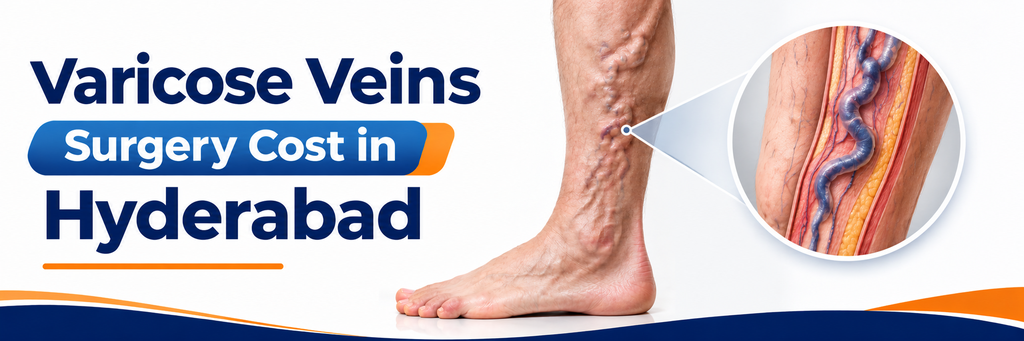
Varicose veins are swollen, twisted veins that bulge under the skin, most often in the legs and ankles. Veins carry blood back to the heart, and small one-way valves inside them keep the blood moving upwards. When the valves weaken, blood flows backwards and
pools, and the vein stretches, twists and rises towards the skin. The veins often look blue or purple.
What causes varicose veins?
The cause is weak valves in the leg veins, and several things make that more likely:
- Getting older
- A family history of varicose veins
- Standing or sitting for long hours, for example at work
- Being overweight
- Pregnancy and hormonal changes, including around menopause
- An earlier leg injury, or a blood clot in the leg
- Wearing very tight clothing around the waist or legs for long periods
Symptoms of varicose veins
- Visible twisted, blue or purple veins
- Aching, heaviness or tiredness in the legs, especially at the end of the day
- Swelling around the ankles
- Itching, or dry, darkened skin around the veins
- Cramps at night
- Sores near the ankle that heal slowly
When should I worry about varicose veins?
See a doctor if:
- Your legs ache or swell regularly
- The skin becomes dark, itchy, dry or inflamed
- A sore near the ankle does not heal
- A vein bleeds
- A vein becomes hot, red and tender
Go to the nearest emergency department, or call +91 955 955 1 955, if a leg swells suddenly with pain, redness or warmth, if you have chest pain or breathlessness, or if a vein bleeds heavily. For a bleeding vein, lie down, raise the leg and press firmly on the spot while you get help.
Do all varicose veins need surgery?
No. Many people manage well without it. Your doctor may first suggest:
- Compression stockings
- Walking and regular exercise
- Raising your legs when you rest
- Losing weight, if you are overweight
- Avoiding long periods of standing or sitting
Surgery or another procedure is advised when symptoms continue, when the skin changes, or when complications such as sores, bleeding or clots appear.
How are varicose veins diagnosed?
Your surgeon examines your legs while you stand, and asks about your symptoms and family history. A Doppler ultrasound scan shows which veins are leaking and how the blood is flowing. Blood tests may be done to check that you are fit for surgery. Your surgeon will tell you which tests you need.
Treatments for varicose veins
Your surgeon chooses the treatment that suits the size and position of your veins and your health. The main options are:
- Sclerotherapy: a special liquid is injected into the vein, which makes it scar and close. It is often used for smaller veins.
- Laser ablation: a thin fibre is passed into the vein through a small puncture, and heat from the laser closes the vein from the inside.
- Radiofrequency ablation: a thin tube delivers radio-wave heat that closes the vein from the inside.
- Vein ligation and stripping: the faulty vein is tied off near the groin and removed through small cuts.
- Phlebectomy: small veins near the skin are removed through tiny cuts.
At Wellness Hospitals, varicose veins surgery costs ₹80,000 to ₹1,20,000 for one leg and ₹1,20,000 to ₹1,60,000 for both legs. Please ask our advisor which technique your estimate covers, and the price of sclerotherapy.
How is varicose vein surgery done?
The steps depend on the technique, but they follow a pattern:
- Scan and marking. Your surgeon maps the leaking veins with an ultrasound scan.
- Anaesthesia. Many procedures use local anaesthesia, and some need spinal or general anaesthesia.
- Treating the vein. For laser or radiofrequency ablation, a thin tube is guided into the vein through a small puncture, and heat closes it. For ligation and stripping, the vein is tied off and removed through small cuts. For phlebectomy, small veins are removed through tiny cuts.
- Dressing and compression. The leg is bandaged, and a compression stocking or bandage is put on.
- Walking. You are helped to walk soon afterwards.
The procedure often takes about one to two hours, depending on the technique and on how many veins are treated. Your surgeon will explain the plan for your case.
How to prepare for varicose vein surgery
- Follow the instructions you are given about when to stop eating and drinking
- Tell your doctor about all your medicines, especially blood thinners and hormone tablets. Do not stop any medicine unless you are told to.
- Tell the team about allergies, earlier leg clots and other health conditions
- Bring your Doppler scan and other reports, insurance details and a photo ID
- Wear loose, comfortable clothes, and plan for a family member to be with you
Recovery after varicose vein surgery
Recovery differs for each person and each technique. This is a general guide, and your surgeon will tell you what applies to you.
| When | What to expect |
|---|---|
| Day of the procedure | Your leg is bandaged and you wear compression. You are helped to walk soon afterwards. Many people go home the same day. |
| First week | Some aching, tightness and bruising along the treated vein. Walk every day, and avoid standing or sitting for long periods. |
| Weeks 2 to 4 | Bruising and tightness fade. Many people are back at desk work within days, and heavier work and sport need longer. |
| Weeks 4 to 6 | Most people feel recovered. Your surgeon checks the result and may repeat the scan. |
After the procedure: care
- Wear your compression stockings or bandages as advised, usually for some weeks
- Walk every day, and raise your legs when you rest
- Avoid heavy lifting, long periods of standing, and strenuous exercise for the time your surgeon advises
- Take your medicines as prescribed
- Keep your follow-up visits and scans
Risks of varicose vein surgery
Varicose vein treatment is generally safe, but every procedure has risks. They include bruising, swelling, pain along the treated vein, skin discolouration, numbness or tingling, infection, a blood clot in the leg, and new varicose veins appearing over time. Your surgeon will explain the risks that apply to you.
When to call your doctor after the procedure
- Fever or chills
- Redness, swelling or discharge at a wound
- Increasing pain, or a hard, tender lump along the vein
- Pain, swelling or redness in the calf
- Numbness that does not settle
Go to the nearest emergency department if you have chest pain, breathlessness, or a leg that swells suddenly.
How can I prevent varicose veins?
You cannot prevent them completely, especially if they run in your family, but these habits help:
- Keep moving, and avoid long periods of standing or sitting
- Keep a healthy weight
- Raise your legs when you rest
- Exercise regularly, especially walking
- Wear compression stockings if your doctor advises them
- Avoid very tight clothing
Varicose veins surgery cost with insurance and cashless cover
Many health insurance policies cover varicose vein treatment when it is medically needed, for example for pain, swelling, skin changes or ulcers. A treatment done only for appearance is usually not covered. Cover depends on your policy terms and waiting periods, so check them before you plan.
Wellness Hospitals offers cashless treatment where your policy or scheme covers it, with an insurance helpdesk available 24/7. Call +91 955 955 1 955 (Sangareddy branch: +91 955 955 1 500). Cashless approval is decided by your insurer, and any amount not approved is payable by the patient or family. See how cashless treatment at Wellness Hospitals works.
Get an estimate
Call +91 955 955 1 955 to speak to our team or book a consultation. Bring your Doppler scan and other reports, and your insurance details.