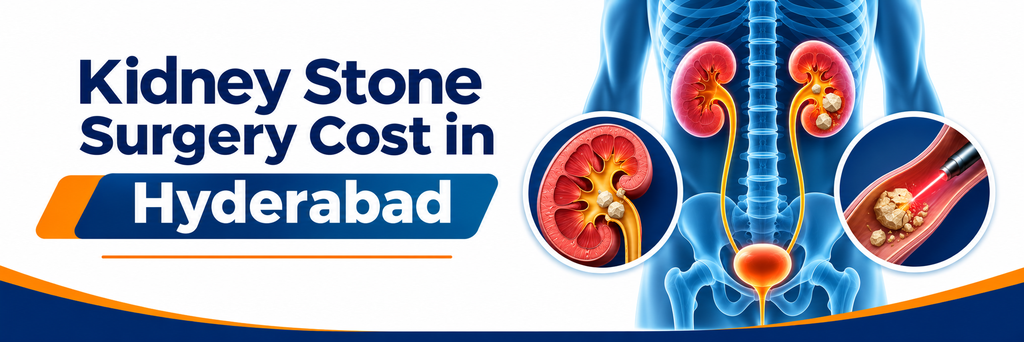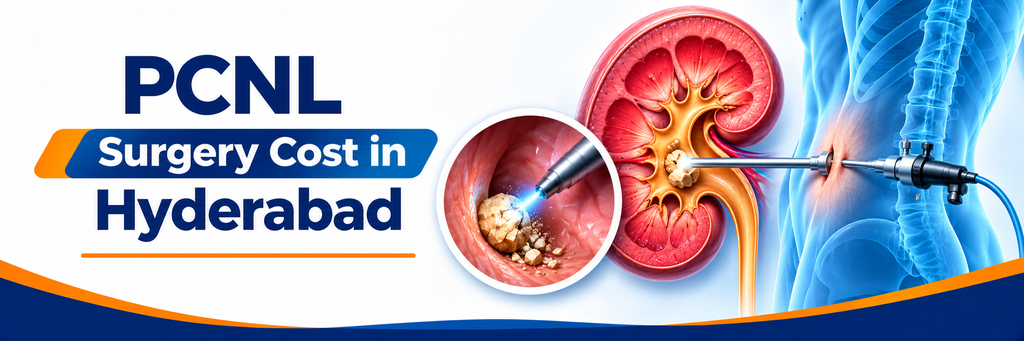
RIRS Cost in Hyderabad
If your urologist has suggested RIRS for a kidney stone, you probably want to know what it costs, whether it is the right operation for your stone, and what recovery looks like. This page gives you the price at Wellness Hospitals, compares RIRS with the other stone operations, and answers the questions patients ask most.
RIRS cost at a glance
- RIRS (retrograde intrarenal surgery): ₹1,14,000 – ₹1,50,000
- URS with laser and DJ stenting (ureter stones): ₹68,000 – ₹90,000
- PCNL with DJ stenting (large stones): ₹80,000 – ₹1,05,000
- DJ stenting (day care): ₹35,000, and DJ stent removal (day care): ₹18,000
What decides the price
- Size, number and position of the stones
- Whether a stent is needed, and what your estimate includes
- A second session, if a large stone needs staged treatment
- Length of stay and any complications
RIRS cost in Hyderabad at Wellness Hospitals
| Procedure | Note | Price |
|---|---|---|
| RIRS (retrograde intrarenal surgery) | Please ask our advisor what your estimate includes, such as the stent and its removal | ₹1,14,000 – ₹1,50,000 |
*Approximate costs. The final cost may vary for each patient.
Please note: the price above is a guide, not a fixed quote. Where your price falls within the range depends on the size, number and position of your stones, whether a stent is needed, whether a second session is planned, your tests, the length of your stay, other health conditions and any complications. Your final bill may differ if extra tests, medicines or days in hospital are needed. If your urologist changes the plan after evaluation, the cost will be decided accordingly. Please contact our advisor when you ask for an estimate, and ask for it in writing before the procedure.
Other kidney stone procedure costs at Wellness Hospitals
Your urologist chooses the operation by the size and position of your stone. These are the related prices.
| Procedure | Price | Note |
|---|---|---|
| URS with laser and DJ stenting | ₹68,000 – ₹90,000 | For stones in the ureter |
| PCNL with DJ stenting | ₹80,000 – ₹1,05,000 | For large stones |
| DJ stenting (day care) | ₹35,000 | |
| DJ stent removal (day care) | ₹18,000 |
*Approximate costs. The final cost may vary for each patient.
Read more in our guide to kidney stone surgery cost in Hyderabad.
What affects the cost of RIRS?
Stone size and number. Larger stones and several stones need more laser time and a longer operation.
Position of the stone. Stones in hard-to-reach parts of the kidney, such as the lower part, can take longer to treat.
The shape of your kidney and urinary tract. A narrow ureter or an unusual kidney can make reaching the stone harder.
The double J stent. Many patients have a thin temporary tube (a stent) placed after RIRS to help the kidney drain. Ask whether the stent and its later removal are in your estimate. If they are billed separately, DJ stenting costs ₹35,000 and DJ stent removal costs ₹18,000 as day-care procedures.
A second session. A large stone is sometimes treated in two stages. Ask what your estimate covers if a second RIRS is needed.
Infection. A urine infection has to be treated before surgery, and this can add time and medicines.
Tests. A CT scan, a urine test and blood tests help plan the operation. Ask which are included.
Anaesthesia and theatre. The surgical team, anaesthesia and operation theatre use are part of the bill.
Length of stay and complications. A longer stay, or treatment for a complication, changes the cost.
Insurance. The limits and terms in your policy decide how much your insurer pays, and you pay any amount that is not covered.
The full cost of RIRS
When you plan your budget, look beyond the operation price:
- Scans and urine tests before surgery. Ask which are included in your estimate.
- The stent and its removal. Ask whether both are covered.
- A second session, if your stone needs staged treatment.
- Medicines. Ask which are included, and plan for the ones you take at home.
- Follow-up visits and scans. A scan a few months later checks for new stones.
- Insurance limits. Check your waiting period and any limits in your policy.
What is RIRS?
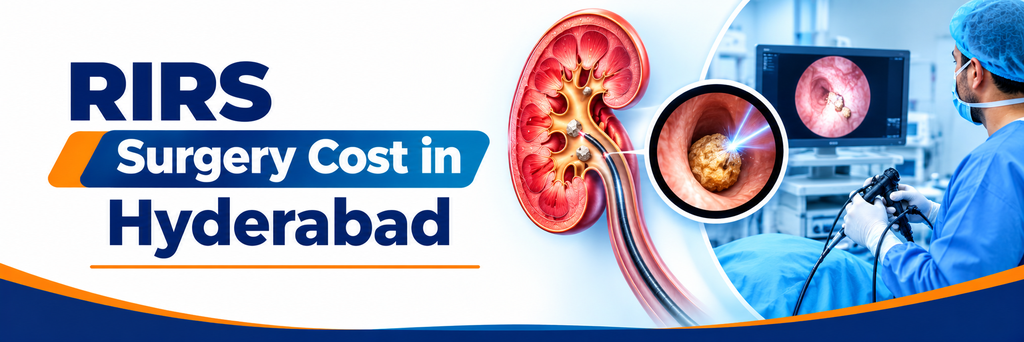
RIRS stands for retrograde intrarenal surgery. It is a keyhole way to treat kidney stones without making a cut. The surgeon passes a thin, flexible telescope (a flexible ureteroscope) through the urethra, the bladder and the ureter, all the way into the kidney. When the stone is found, a laser fibre breaks it into small pieces. The pieces are lifted out with a tiny basket or left to pass in the urine. A temporary stent is often placed afterwards to help the kidney drain while it heals.
Who is RIRS suitable for?
Your urologist chooses the operation after looking at your scans. RIRS is often used for:
- Kidney stones of about 1 to 2 cm
- Stones in hard-to-reach parts of the kidney, such as the lower part
- Stones that did not clear with other treatment
- People for whom a bigger operation carries more risk, for example those with a bleeding problem or a very high body weight
- Kidneys with an unusual shape
RIRS may not be the right choice if:
- The stone is very large, more than about 2 cm. It may need PCNL, or RIRS in two stages.
- You have a urine infection that has not been treated. It has to be treated first.
- The urinary passage is so narrow that the telescope cannot pass. Sometimes a stent is placed first, and RIRS is done a few weeks later.
RIRS vs URS vs PCNL
| RIRS | URS | PCNL | |
|---|---|---|---|
| Cut | None, through the urinary passage | None, through the urinary passage | A small cut in the back |
| Anaesthesia | Spinal or general | Spinal or general | General |
| Usual stay | Often 1 to 2 days | Often 1 to 2 days | Often 3 to 5 days |
| Recovery | Often a few days | Often a few days | Often several weeks |
| Best for | Kidney stones of about 1 to 2 cm, and hard-to-reach stones | Stones in the ureter | Large or staghorn stones |
| Cost at Wellness Hospitals | ₹1,14,000 – ₹1,50,000 | ₹68,000 – ₹90,000, with laser and DJ stenting | ₹80,000 – ₹1,05,000, with DJ stenting |
*Approximate costs. The final cost may vary for each patient.
Your urologist recommends the operation that suits your stone, and the price should not decide it.
Symptoms of kidney stones
- Severe pain in the side or back that may spread to the groin
- Pain that comes in waves
- Blood in the urine
- Burning or pain when passing urine, or a frequent urge to pass urine
- Nausea or vomiting
- Cloudy or foul-smelling urine
A stone in the kidney may cause no symptoms until it moves into the ureter.
When is kidney stone pain an emergency?
Go to the nearest emergency department, or call +91 955 955 1 955, if you have:
- Severe pain with fever or chills
- Repeated vomiting with severe pain
- Blood in the urine with severe pain
- Little or no urine, or being unable to pass urine
A blocked, infected kidney needs urgent treatment.
Tests before RIRS
- CT scan of the kidneys, ureters and bladder, which shows the size, number and position of the stones
- Ultrasound, which shows stones and any swelling of the kidney
- Urine test and urine culture, to check for infection
- Blood tests, including kidney function
- X-ray, in some cases
Your urologist will tell you which tests you need.
How to prepare for RIRS
- Follow the instructions you are given about when to stop eating and drinking
- Tell your doctor about all your medicines, especially blood thinners such as aspirin, clopidogrel or warfarin. Do not stop any medicine unless you are told to.
- Tell the team about allergies and other health conditions
- Any urine infection must be treated before the operation
- Drink plenty of water in the days before, unless your doctor says otherwise
- Bring your scans and reports, insurance details and a photo ID, and bring a family member
How is RIRS done?
- Anaesthesia. You are given spinal or general anaesthesia.
- The telescope. A thin flexible telescope is passed through the urethra, bladder and ureter into the kidney. There is no cut.
- The laser. The surgeon finds the stone and breaks it into small pieces with a laser fibre.
- Clearing the pieces. The pieces are lifted out with a small basket, or left to pass in the urine.
- The stent. A thin temporary tube (a double J stent) is often placed to help the kidney drain.
- Recovery. You are watched as you wake up.
The operation often takes about an hour or two, depending on the size and number of stones. Your urologist will explain the plan for your case.
Recovery after RIRS
Recovery differs for each person. This is a general guide, and your urologist will tell you what applies to you.
| When | What to expect |
|---|---|
| Day of the operation | You wake up in the recovery area, usually with a stent in place. Many people stay one or two nights. |
| Days 1 to 3 | Mild discomfort, blood in the urine and a frequent urge to pass urine are common. Drink plenty of fluids, and take your pain relief. |
| Weeks 1 to 2 | Many people return to desk work within about a week. The stent is usually removed after about one to two weeks. |
| Weeks 2 to 4 | Full recovery. Avoid heavy lifting for about two weeks, or as advised. |
The double J stent
A double J stent is a thin, soft tube between the kidney and the bladder. It keeps the kidney draining while the area heals. While it is in place, you may feel an urge to pass urine, mild discomfort in the side, or a little blood in the urine. It is usually removed after about one to two weeks, in a short day-care procedure. Do not leave a stent in longer than your urologist advises.
After RIRS: care and stone prevention
Kidney stones can come back, but these steps lower the chance:
- Drink enough water through the day to pass plenty of pale urine
- Eat less salt and less animal protein
- Add citrus fruits to your diet
- Cut down on oxalate-rich foods, such as spinach, nuts and tea, if your urologist advises it for your stone type
- Take any medicine your urologist prescribes to prevent stones
- Keep your follow-up visits, and have a scan a few months later if you are advised to
Risks of RIRS
RIRS is generally safe, but every operation has risks. They include blood in the urine, a urine or kidney infection, discomfort from the stent, injury to or narrowing of the ureter, stone pieces left behind that need another session, a rare injury to the kidney, and a reaction to the anaesthesia. Your urologist will explain the risks that apply to you.
When to call your doctor after RIRS
- Fever or chills
- Severe pain that is not easing with your medicines
- Heavy bleeding, or clots in the urine
- Being unable to pass urine
- Repeated vomiting
In an emergency, go to the nearest emergency department.
RIRS cost with insurance and cashless cover
Many health insurance policies cover RIRS when it is medically needed, subject to your policy terms and waiting periods. Check them before you plan.
Wellness Hospitals offers cashless treatment where your policy or scheme covers it, with an insurance helpdesk available 24/7. Call +91 955 955 1 955 (Sangareddy branch: +91 955 955 1 500). Cashless approval is decided by your insurer, and any amount not approved is payable by the patient or family. See how cashless treatment at Wellness Hospitals works.
Get an estimate
Call +91 955 955 1 955 to speak to our team or book a consultation. Bring your scans and other reports, and your insurance details.