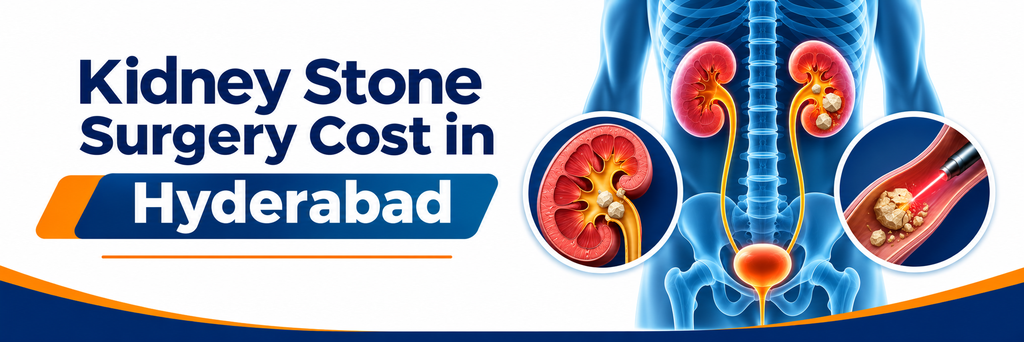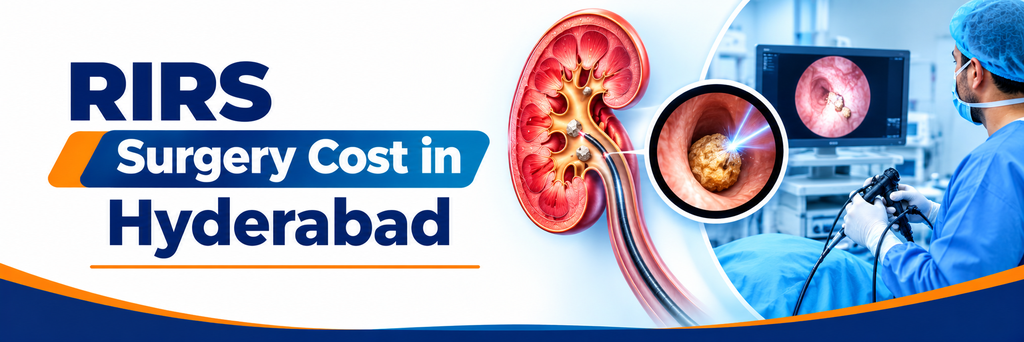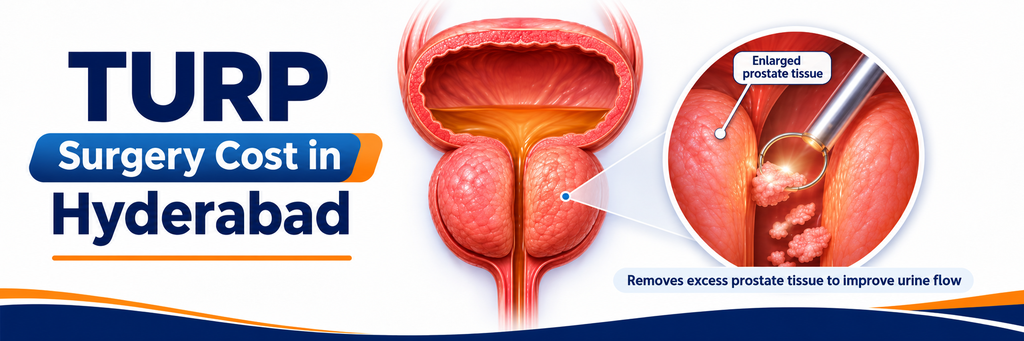
PCNL Surgery Cost in Hyderabad
PCNL cost at a glance
- PCNL with DJ stenting: ₹80,000 – ₹1,05,000
- Mini, ultra-mini, super-mini and micro PCNL: ₹80,000 – ₹1,20,000
- Bilateral PCNL (both kidneys): ₹1,20,000 – ₹1,80,000
- PCNL for a staghorn stone, or with more than one access track: ₹1,20,000 – ₹1,80,000
- RIRS (for smaller kidney stones): ₹1,14,000 – ₹1,50,000
- URS with laser and DJ stenting (ureter stones): ₹68,000 – ₹90,000
- DJ stenting (day care): ₹35,000, and DJ stent removal (day care): ₹18,000
What decides the price
- Size, number and position of the stones, and how hard they are
- The type of PCNL, and how many access tracks are needed
- Stent or drainage tube, and what your estimate includes
- Length of stay and any complications
PCNL surgery cost in Hyderabad at Wellness Hospitals
| Procedure | Price | Note |
|---|---|---|
| PCNL with DJ stenting | ₹80,000 – ₹1,05,000 | The DJ stent is included |
| Mini, ultra-mini, super-mini or micro PCNL | ₹80,000 – ₹1,20,000 | |
| Bilateral PCNL (both kidneys) | ₹1,20,000 – ₹1,80,000 | |
| PCNL for a staghorn stone, or with more than one access track | ₹1,20,000 – ₹1,80,000 |
*Approximate costs. The final cost may vary for each patient.
Please note: the price above is a guide, not a fixed quote. Where your price falls within the range depends on the size, number and position of your stones, how hard they are, the type of PCNL, how many access tracks are needed, whether a second session is planned, your tests, the length of your stay, other health conditions and any complications. Your final bill may differ if extra tests, medicines or days in hospital are needed. If your urologist changes the plan after evaluation, the cost will be decided accordingly. Please contact our advisor when you ask for an estimate, and ask for it in writing before the procedure.
Other kidney stone procedure costs at Wellness Hospitals
Your urologist chooses the operation by the size and position of your stone. These are the related prices.
| Procedure | Price | Note |
|---|---|---|
| RIRS (retrograde intrarenal surgery) | ₹1,14,000 – ₹1,50,000 | For smaller kidney stones |
| URS with laser and DJ stenting | ₹68,000 – ₹90,000 | For stones in the ureter |
| DJ stenting (day care) | ₹35,000 | |
| DJ stent removal (day care) | ₹18,000 |
*Approximate costs. The final cost may vary for each patient.
Read more in our guides to RIRS cost in Hyderabad and kidney stone surgery cost in Hyderabad.
What affects the cost of PCNL?
Size and number of stones. Large stones, or several stones, take longer to break up and remove.
Position and complexity. A stone in a hard-to-reach part of the kidney, or one that branches into several parts of the kidney (a staghorn stone), makes the operation longer.
Hardness and type of stone. Very hard stones need more laser or ultrasound energy.
Type of PCNL. Standard, mini, ultra-mini, super-mini and micro PCNL use different instruments and are priced differently.
Position on the table. PCNL can be done lying face down (prone) or on the back (supine). Your team chooses what is best for you.
Number of access tracks. Some complex stones need more than one small tunnel into the kidney.
Stent or drainage tube. After PCNL a thin tube (a double J stent) or a drainage tube (a nephrostomy tube) is often left in for a short time. Ask what your estimate includes.
Laser or ultrasound equipment. Breaking up the stone needs special energy sources, and these add to the cost of consumables.
A second session. A large or complicated stone sometimes needs more than one operation.
Infection. A urine infection has to be treated before surgery.
Tests. A CT scan, a urine test and blood tests help plan the operation. Ask which are included.
Anaesthesia and theatre. The surgical team, anaesthesia and operation theatre use are part of the bill.
Length of stay and complications. A longer stay, or treatment for a complication, changes the cost.
Other health conditions. Diabetes, kidney problems or a bleeding tendency may mean extra tests or care.
Insurance. The limits and terms in your policy decide how much your insurer pays, and you pay any amount that is not covered.
The full cost of PCNL
When you plan your budget, look beyond the operation price:
- Scans and urine tests before surgery. Ask which are included in your estimate.
- The stent or drainage tube, and later removal of the stent. A day-care DJ stent removal costs ₹18,000 at Wellness Hospitals.
- A second session, if your stone needs staged treatment.
- Medicines. Ask which are included, and plan for the ones you take at home.
- Follow-up visits and scans. A scan after the operation checks that the stone is gone.
- Insurance limits. Check your waiting period and any limits in your policy.
What is PCNL?
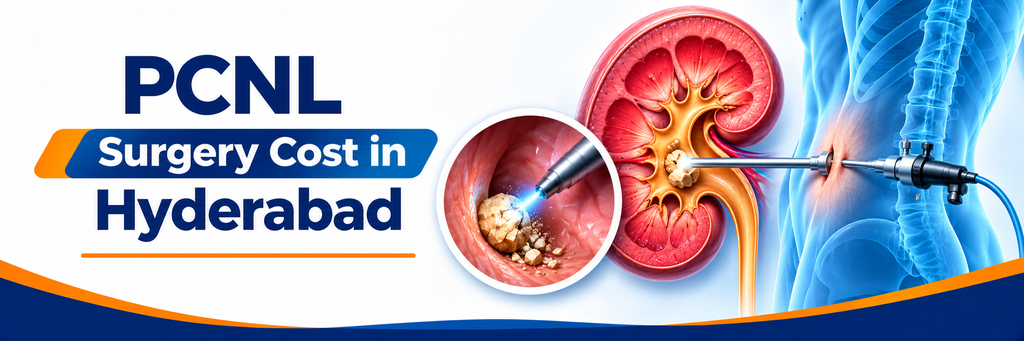
PCNL stands for percutaneous nephrolithotomy. It is the standard operation for large kidney stones. The surgeon makes a small cut in your back, about the width of a finger, and passes a thin telescope (a nephroscope) through a narrow tunnel straight into the kidney. The stone is broken into small pieces with a laser or another energy source, and the pieces are taken out through the tunnel. You are asleep under general anaesthesia, and X-ray or ultrasound images guide the surgeon.
Because only a small cut is needed, PCNL causes much less damage than old-style open surgery, and recovery is faster.
Who needs PCNL?
Your urologist chooses the operation after looking at your scans. PCNL is usually advised for:
- Kidney stones larger than about 2 cm
- Staghorn stones, which branch into several parts of the kidney
- Stones in the lower part of the kidney that other treatments do not clear well
- Stones that remain after RIRS or URS
- Stones that keep blocking the flow of urine or causing repeated infections
- Stones in a kidney or urinary tract with an unusual shape
RIRS or PCNL: which is better?
Neither is better for everyone. The right operation depends on the size, number and position of your stones and on your health, not on the price.
- PCNL is usually better for large stones (more than about 2 cm) and for staghorn stones, because it can remove a large stone in one go. It needs a small cut in the back and a longer stay.
- RIRS is usually better for smaller kidney stones, because no cut is needed. A very large stone may need more than one RIRS session.
| PCNL | RIRS | URS | |
|---|---|---|---|
| Cut | A small cut in the back | None, through the urinary passage | None, through the urinary passage |
| Anaesthesia | General | Spinal or general | Spinal or general |
| Usual stay | Often 3 to 5 days | Often 1 to 2 days | Often 1 to 2 days |
| Recovery | Often several weeks | Often a few days | Often a few days |
| Best for | Large or staghorn stones | Kidney stones of about 1 to 2 cm | Stones in the ureter |
| Cost at Wellness Hospitals | ₹80,000 – ₹1,05,000, with DJ stenting | ₹1,14,000 – ₹1,50,000 | ₹68,000 – ₹90,000, with laser and DJ stenting |
*Approximate costs. The final cost may vary for each patient.
Your urologist recommends the operation that suits your stone. See our guide to RIRS cost in Hyderabad for more.
Types of PCNL
PCNL comes in several forms, and your urologist chooses the one that fits your stone. At Wellness Hospitals, PCNL with DJ stenting costs ₹80,000 to ₹1,05,000. Mini, ultra-mini, super-mini and micro PCNL cost ₹80,000 to ₹1,20,000. Bilateral PCNL, and PCNL for a staghorn stone or with more than one access track, cost ₹1,20,000 to ₹1,80,000.
- Standard PCNL: a nephroscope is passed through a small cut in the back to reach and remove the stone.
- Mini PCNL: smaller instruments and a narrower tunnel, which may mean less bleeding and tissue injury for some patients.
- Ultra-mini and super-mini PCNL: even narrower tunnels, with special irrigation and suction to clear the stone pieces.
- Micro PCNL: a very fine needle-like system with a tiny camera and laser, used for selected small stones.
- Prone PCNL: you lie face down, which gives a direct route to the kidney. It is the most common position.
- Supine PCNL: you lie on your back or tilted a little to the side. This can make breathing and anaesthesia easier, and sometimes allows a RIRS-type telescope to be used at the same time.
- Bilateral PCNL: stones in both kidneys are treated, in one session or in separate ones, depending on the stones, your kidney function and your health.
- Multi-tract PCNL: complex stones may need more than one small tunnel into the kidney.
- PCNL for staghorn stones: the usual treatment for large branching stones. A second procedure is sometimes needed to clear every piece.
Other treatments for kidney stones
Surgery is not the only option, and your urologist will explain what is right for you.
- Observation: small stones that cause no symptoms may only need regular scans.
- Medicines to help a ureter stone pass: some medicines relax the ureter and help small stones pass in the urine.
- Medicines that change the urine: these can dissolve some uric acid stones, and need follow-up.
- URS and RIRS: a thin telescope is passed through the urinary passage, and a laser breaks the stone.
- Laparoscopic or open surgery: rarely needed today, and used when other treatments have failed or cannot be used.
Symptoms of kidney stones
- Severe pain in the side or back that may spread to the groin
- Pain that comes in waves
- Blood in the urine
- Burning or pain when passing urine, or a frequent urge to pass urine
- Nausea or vomiting
- Fever, if there is an infection
A large stone can sit in the kidney for a long time with few symptoms, and it can still harm the kidney, so do not ignore it.
When is kidney stone pain an emergency?
Go to the nearest emergency department, or call +91 955 955 1 955, if you have:
- Severe pain with fever or chills
- Repeated vomiting with severe pain
- Blood in the urine with severe pain
- Little or no urine, or being unable to pass urine
A blocked, infected kidney needs urgent treatment.
Tests before PCNL
- CT scan of the kidneys, ureters and bladder, which shows the size, number and position of the stones
- Ultrasound, which shows stones and any swelling of the kidney
- Urine test and urine culture, to check for infection
- Blood tests, including kidney function and blood clotting
- X-ray or a kidney function scan, in some cases
Your urologist will tell you which tests you need.
How to prepare for PCNL
- Follow the instructions you are given about when to stop eating and drinking
- Tell your doctor about all your medicines, especially blood thinners such as aspirin, clopidogrel or warfarin. Do not stop any medicine unless you are told to.
- Tell the team about allergies, diabetes and other health conditions
- Any urine infection must be treated before the operation
- Bring your scans and reports, insurance details and a photo ID, and bring a family member
How is PCNL done?
- Anaesthesia. You are given general anaesthesia and are asleep during the operation.
- Position. You lie face down (prone) or on your back (supine), as your team decides.
- The tunnel. Guided by X-ray or ultrasound, the surgeon passes a needle through the skin of your back into the kidney, and widens a narrow tunnel.
- The stone. A thin telescope goes down the tunnel. The stone is broken into pieces with a laser or another energy source, and the pieces are taken out.
- Stent or tube. A thin stent, or a drainage tube from the kidney, is often left in for a short time to help the kidney drain and heal.
- Recovery. You are watched as you wake up.
The operation often takes about one to two hours, and longer for large stones or more than one tunnel. Your urologist will explain the plan for your case.
Is PCNL surgery painful?
You are under general anaesthesia, so you do not feel pain during the operation. Afterwards there is soreness around the small cut in your back, and a drainage tube or a stent can be uncomfortable. Your team gives you pain relief, and the pain usually settles over several days. Most people find it far easier than the pain of the stone itself.
Is PCNL safe for the kidneys?
PCNL is a well-established operation and is generally safe when it is done for the right stone. It makes a small tunnel into the kidney, and the kidney heals. In most people it helps protect the kidney by removing a stone that could damage it. Like any operation, it has risks, such as bleeding, infection and, rarely, injury to nearby organs. Before the operation, your urologist checks how well your kidneys work and explains the risks that apply to you.
Recovery after PCNL
Recovery differs for each person. This is a general guide, and your urologist will tell you what applies to you.
| When | What to expect |
|---|---|
| Day of the operation | You wake up in the recovery area, where your pulse, urine and pain are watched. A stent or drainage tube may be in place. |
| Hospital stay | Often about 3 to 5 days. You are encouraged to drink fluids and start walking. |
| First 2 to 3 weeks | Limited activity. Blood in the urine, soreness and an urge to pass urine are common. Avoid heavy lifting. |
| Weeks 4 to 6 | Full recovery for most people. A scan checks that the stone is gone, and any stent is removed. |
The stent and the drainage tube
After PCNL, a thin soft stent between the kidney and the bladder, or a drainage tube from the kidney through the back, often stays in for a short time. They keep the kidney draining while it heals. You may feel an urge to pass urine, mild discomfort in the side, or a little blood in the urine. Your urologist will tell you when the tube or stent is to be removed. At Wellness Hospitals, a day-care DJ stent removal costs ₹18,000. Do not leave a stent in longer than advised.
After PCNL: care and stone prevention
Kidney stones can come back, but these steps lower the chance:
- Drink enough water through the day to pass plenty of pale urine
- Eat less salt and less animal protein
- Add citrus fruits to your diet
- Cut down on oxalate-rich foods, such as spinach, nuts and tea, if your urologist advises it for your stone type
- Take any medicine your urologist prescribes to prevent stones
- Keep your follow-up visits and scans
Risks of PCNL
PCNL is generally safe, but every operation has risks. They include bleeding, which rarely needs a blood transfusion, a urine or kidney infection, leakage of urine, injury to a nearby organ such as the lung or bowel (rare), stone pieces left behind that need another procedure, discomfort from the stent or tube, and a reaction to the anaesthesia. Your urologist will explain the risks that apply to you.
When to call your doctor after PCNL
- Fever or chills
- Severe pain that is not easing with your medicines
- Heavy bleeding, or clots in the urine
- Redness, swelling or leaking at the cut in your back
- Being unable to pass urine
- Breathlessness or chest pain
In an emergency, go to the nearest emergency department.
PCNL cost with insurance and cashless cover
Many health insurance policies cover PCNL when it is medically needed, subject to your policy terms and waiting periods. Check them before you plan.
Wellness Hospitals offers cashless treatment where your policy or scheme covers it, with an insurance helpdesk available 24/7. Call +91 955 955 1 955 (Sangareddy branch: +91 955 955 1 500). Cashless approval is decided by your insurer, and any amount not approved is payable by the patient or family. See how cashless treatment at Wellness Hospitals works.
Get an estimate
Call +91 955 955 1 955 to speak to our team or book a consultation. Bring your scans and other reports, and your insurance details.