Laparoscopic Hysterectomy Cost in Hyderabad
Being told you may need your uterus removed brings up a lot of questions, and cost is only one of them. You may also be wondering how risky the surgery is, what life is like afterwards, and whether the timing is right for you. This page gives you the price at Wellness Hospitals, compares keyhole (laparoscopic) surgery with open surgery, and answers those questions in plain words.
Hysterectomy cost at a glance
- Laparoscopic hysterectomy (keyhole): ₹91,000 – ₹1,20,000
- Open hysterectomy (abdominal): ₹78,000 – ₹1,02,000
- D&C (dilatation and curettage): ₹25,000
- If your ovaries or tubes are removed in the same operation: ₹80,000 – ₹1,20,000
What decides the price
- The type of operation: keyhole or open, and whether the cervix, ovaries or tubes are also removed
- The reason for surgery, and how large or complex the problem is
- Tests before surgery, and the length of your stay
- Any complications
Laparoscopic hysterectomy cost in Hyderabad at Wellness Hospitals
| Procedure | Price | Note |
|---|---|---|
| Laparoscopic hysterectomy | ₹91,000 – ₹1,20,000 | With the ovaries or tubes removed, the price is ₹80,000 to ₹1,20,000 |
| Open hysterectomy | ₹78,000 – ₹1,02,000 | A longer cut in the lower abdomen |
*Approximate costs. The final cost may vary for each patient.
Please note: the prices above are a guide, not a fixed quote. Where your price falls within a range depends on factors such as the reason for surgery, the size of the uterus and any fibroids, whether the ovaries or tubes are also removed, any earlier surgery, your tests, the length of your stay, other health conditions and any complications. Your final bill may differ if extra tests, medicines or days in hospital are needed. If your gynaecologist changes the plan after evaluation, for example from keyhole to open surgery, the cost will be decided accordingly. Please contact our advisor when you ask for an estimate, and ask for it in writing before surgery.
Other gynaecology costs at Wellness Hospitals
Your gynaecologist may suggest tests or a smaller procedure before, or instead of, a hysterectomy. These are the related prices.
| Procedure | Price | Note |
|---|---|---|
| D&C (dilatation and curettage) | ₹25,000 | A short procedure to take a sample from the lining of the womb |
| Open hysterectomy | ₹78,000 – ₹1,02,000 |
*Approximate costs. The final cost may vary for each patient.
Read more in our guide to C-section cost in Hyderabad.
For all approaches to hysterectomy, read our guide to hysterectomy cost in Hyderabad.
What affects the cost of a laparoscopic hysterectomy?
Type of hysterectomy. A total hysterectomy removes the uterus and the cervix. A subtotal hysterectomy leaves the cervix. Removing the ovaries and tubes as well makes the operation longer. With the ovaries or tubes removed, the price is ₹80,000 to ₹1,20,000.
Reason for surgery. A hysterectomy for heavy bleeding is different from one for severe endometriosis, a very large fibroid or a cancer, which can need a more complex operation or a specialist team.
Size of the uterus and fibroids. A very large uterus can take longer to remove.
Earlier surgery. Scar tissue from earlier operations, such as a C-section, can make surgery more complex.
Keyhole or open surgery. If your surgeon needs to change from keyhole to open surgery during the operation, the cost changes.
Tests before surgery. A pelvic ultrasound, blood tests, a Pap smear and sometimes a biopsy or MRI help plan the operation. Ask which are included.
Anaesthesia and theatre. The surgical team, anaesthesia and operation theatre use are part of the bill.
Length of stay and complications. A longer stay, or treatment for a complication, changes the cost.
Other health conditions. Diabetes, high blood pressure, anaemia or heart problems may mean extra tests or care.
Insurance. The limits and terms in your policy decide how much your insurer pays, and you pay any amount that is not covered.
The full cost of a hysterectomy
When you plan your budget, look beyond the operation price:
- Tests before surgery. Ask which are included in your estimate.
- Ovaries and tubes. If they are removed, the price is ₹80,000 to ₹1,20,000.
- Consultation and medicines. Ask which are included, and plan for the ones you take at home.
- Follow-up visits. Ask what is included.
- Time away from work. Recovery takes a few weeks.
- Insurance limits. Check your waiting period and any limits in your policy.
What is a laparoscopic hysterectomy?
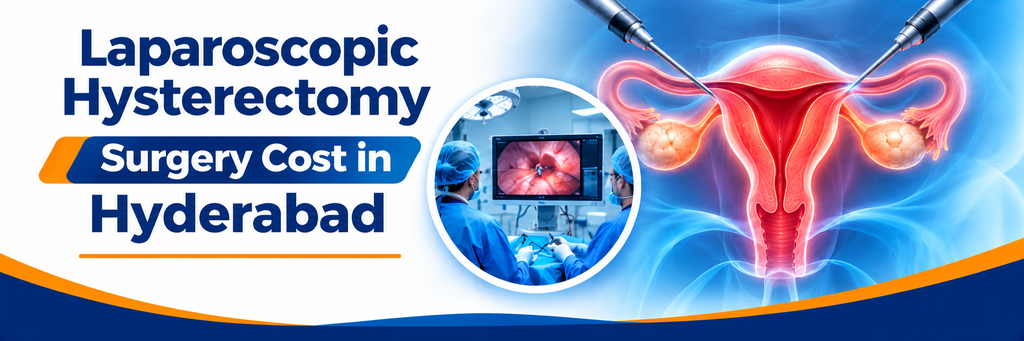
A hysterectomy is an operation to remove the uterus (the womb). In a laparoscopic hysterectomy, the surgeon does this through a few small cuts in the abdomen instead of one long cut. A thin camera (a laparoscope) and fine instruments are passed through the cuts, and the surgeon watches the operation on a screen. The uterus is then taken out through the vagina or through a small cut, depending on its size.
It is major surgery done under general anaesthesia. Because the cuts are small, keyhole surgery usually means less pain, smaller scars and a quicker start to recovery than open surgery.
Why is a hysterectomy done?
A hysterectomy is usually advised when other treatment has not worked, or when the problem is serious. Common reasons are:
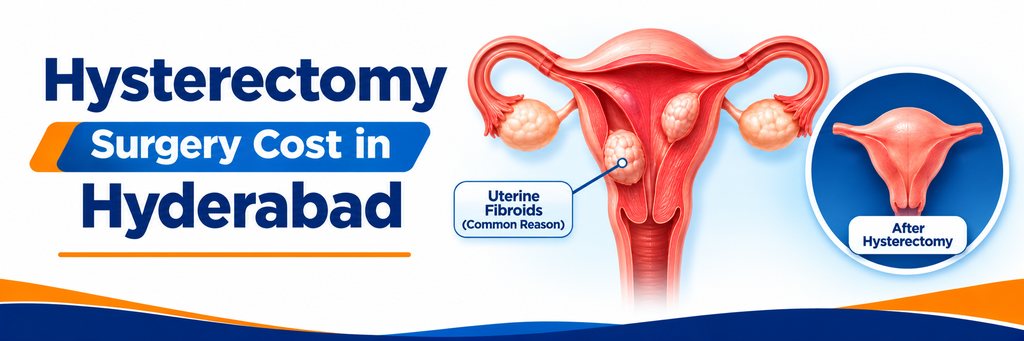
- Fibroids: non-cancerous growths in the uterus that cause heavy bleeding, pain or pressure
- Heavy or irregular periods that medicines have not controlled
- Adenomyosis, where the lining of the womb grows into its wall
- Endometriosis that has not improved with other treatment
- Uterine prolapse, where the uterus slips down into the vagina
- Long-term pelvic pain with a cause in the uterus
- Pre-cancerous changes or cancer of the uterus, cervix or ovary, where a specialist team plans the operation
Your gynaecologist will explain whether surgery is the right choice for you.
Types of hysterectomy
- Total hysterectomy: the uterus and the cervix are removed.
- Subtotal (partial) hysterectomy: the uterus is removed and the cervix is left in place.
- Hysterectomy with removal of the tubes and ovaries: done when there is a medical reason. Removing both ovaries before menopause brings on menopause straight away.
- Radical hysterectomy: a wider operation for some cancers, planned by a specialist team.
The operation can also be done as open (abdominal) surgery or through the vagina. Your gynaecologist chooses the approach that is safest for you.
Laparoscopic or open hysterectomy: which is better?
| Laparoscopic (keyhole) | Open (abdominal) | |
|---|---|---|
| Cuts | A few small cuts | One longer cut in the lower abdomen |
| Pain and scars | Usually less, with smaller scars | Usually more, with a longer scar |
| Hospital stay | Often shorter | Often longer |
| Recovery | Often quicker to start | Often slower |
| Suits | Many hysterectomies, including with a moderately enlarged uterus | Very large uterus or complex cases, or when keyhole surgery is not safe |
| Cost at Wellness Hospitals | ₹91,000 – ₹1,20,000 | ₹78,000 – ₹1,02,000 |
*Approximate costs. The final cost may vary for each patient.
Neither is better for everyone. Your gynaecologist recommends the approach that suits your condition, and the price should not decide it.
Which age is best for uterus removal?
There is no single best age. The right time depends on your condition, your symptoms, your general health and whether you still wish to have children.
- A hysterectomy is often done in the 40s and 50s, usually after other treatments have not worked.
- In younger women, doctors try other treatments first and think carefully about keeping the ovaries, because removing both ovaries before menopause brings early menopause.
- After menopause, a hysterectomy may be advised for problems such as prolapse, abnormal bleeding or pre-cancerous changes.
- At any age, it may be needed urgently for cancer or severe disease.
Your gynaecologist will talk through your options and your plans for a family before advising surgery.
Alternatives to a hysterectomy
Depending on your problem, other treatment may be possible, and your gynaecologist will tell you what suits you:
- Medicines to reduce heavy bleeding or pain, or to shrink fibroids
- A hormonal coil or other hormone treatment
- Procedures that treat the lining of the womb
- Removing only the fibroids, while keeping the uterus (myomectomy)
- Treatments that block the blood supply to fibroids
- Pelvic floor exercises or a support ring for mild prolapse
When should I see a gynaecologist?
- Very heavy periods, or bleeding between periods
- Bleeding after menopause
- Pelvic pain or pressure that does not settle
- A feeling that something is coming down in the vagina
- A lump or swelling in the lower abdomen
Go to the nearest emergency department, or call +91 955 955 1 955, if you have very heavy bleeding that soaks through pads quickly, fainting, or severe pain with fever.
Tests before a hysterectomy
- Pelvic ultrasound, which shows the size of the uterus and any fibroids or growths
- Blood tests, including a blood count to check for anaemia
- Pap smear, to check the cervix
- Biopsy of the womb lining, in some cases
- MRI, in some complex cases
- ECG and other tests, to check that you are fit for anaesthesia
Your gynaecologist will tell you which tests you need.
How to prepare for a hysterectomy
- Follow the instructions you are given about when to stop eating and drinking
- Tell your doctor about all your medicines, especially blood thinners and diabetes medicines. Do not stop any medicine unless you are told to.
- Tell the team about allergies, earlier operations and other health conditions
- Anaemia may need to be treated first
- Stop smoking, because it slows healing
- Bring your reports, insurance details and a photo ID, and plan for a family member to be with you
How is a laparoscopic hysterectomy done?
- Anaesthesia. You are given general anaesthesia and are asleep during the operation.
- Small cuts. The surgeon makes a few small cuts in the abdomen. Gas is used to lift the abdominal wall, so there is room to see and work.
- The camera. A thin camera is passed in, and the surgeon watches on a screen.
- Removing the uterus. The surgeon detaches the uterus from its supports and removes it through the vagina or a small cut. The tubes and ovaries are removed too, only if there is a medical reason.
- Closing. The cuts are closed with stitches or glue, and you are watched as you wake up.
The operation often takes about one to two hours, depending on the size of the uterus and any other work needed. Your gynaecologist will explain the plan for your case.
Is laparoscopic hysterectomy a high-risk surgery?
Laparoscopic hysterectomy is a common operation, and for most women it is not considered high risk. It is still major surgery under general anaesthesia, so it has risks. How much risk applies to you depends on your general health, the reason for surgery, the size of the uterus, any earlier operations and your surgeon's experience. Your gynaecologist will check your health before surgery and explain the risks that apply to you.
Recovery after a laparoscopic hysterectomy
Recovery differs for each person. This is a general guide, and your gynaecologist will tell you what applies to you.
| When | What to expect |
|---|---|
| Day of the operation | You wake up in the recovery area, and you are helped to sit up and take a few steps. You may feel shoulder or abdominal discomfort from the gas, and some soreness at the cuts. |
| Hospital stay | Often about 1 to 2 days. |
| First 2 weeks | Rest, short walks and light activity. A little bleeding or discharge from the vagina is common. |
| Weeks 2 to 4 | Many women return to desk work, and most daily activities become easier. Avoid heavy lifting. |
| Weeks 4 to 6 | Most women feel recovered. Your gynaecologist tells you when you can lift, exercise and resume intercourse, usually after a check-up at about six weeks. |
- Take your medicines as prescribed, and do not stop them without asking your doctor
- Keep the small wounds clean and dry
- Walk a little every day, and drink plenty of fluids
- Eat a balanced diet with enough fibre, to avoid constipation
- Keep your follow-up visit
What happens 5 years after a hysterectomy?
Five years on, most women are well settled, and many feel relief from the heavy bleeding, pain or pressure that led to surgery. What to expect depends on what was removed:
- Periods and pregnancy: your periods have stopped, and pregnancy is not possible.
- If your ovaries were kept, they usually keep making hormones. Some women reach menopause a little earlier than they otherwise would.
- If both ovaries were removed before menopause, menopause began soon after surgery, and symptoms such as hot flushes can be managed with treatment your doctor advises.
- Check-ups: keep your regular health check-ups. Whether you still need Pap smears depends on why the surgery was done and whether the cervix was removed, and your gynaecologist will tell you.
- Staying well: healthy weight, regular exercise, pelvic floor exercises, enough calcium and vitamin D, and good bone and heart health matter, especially after menopause.
Your gynaecologist will explain what to expect in your case.
Risks and complications
Laparoscopic hysterectomy is generally safe, but every operation has risks. They include bleeding, infection, injury to the bladder, the ureter (the tube from the kidney) or the bowel, blood clots in the legs, a reaction to the anaesthesia, pain that continues, and the need to switch to open surgery during the operation. Your gynaecologist will explain the risks that apply to you.
When to call your doctor after surgery
- Fever or chills
- Heavy bleeding from the vagina, or passing large clots
- Severe or worsening abdominal pain
- Redness, swelling or discharge at a wound
- Pain, redness or swelling in a leg
- Difficulty passing urine, or blood in the urine
- Chest pain or breathlessness
In an emergency, go to the nearest emergency department.
Is laparoscopic hysterectomy covered by insurance?
Many health insurance policies cover a hysterectomy when it is medically needed, for example for fibroids, heavy bleeding, prolapse or cancer. Cover depends on your policy terms, waiting periods and limits, and an operation done without a medical reason is not covered. Check your policy before you plan.
Wellness Hospitals offers cashless treatment where your policy or scheme covers it, with an insurance helpdesk available 24/7. Call +91 955 955 1 955 (Sangareddy branch: +91 955 955 1 500). Cashless approval is decided by your insurer, and any amount not approved is payable by the patient or family. See how cashless treatment at Wellness Hospitals works.
Get an estimate
Call +91 955 955 1 955 to speak to our team or book a consultation. Bring your scan and other reports, and your insurance details.