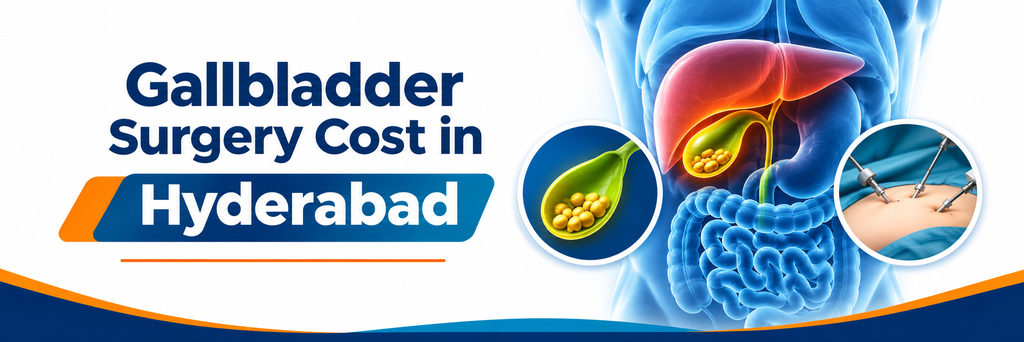
Gallbladder Surgery Cost in Hyderabad
Gallbladder Surgery Cost at Wellness Hospitals
Your final bill depends on the factors below. Our team can explain them for your situation and share an estimate before planned surgery.
| Surgery | Approx. cost |
|---|---|
| Laparoscopic cholecystectomy (keyhole gallbladder removal) | ₹91,000 – ₹1,20,000 |
| Open cholecystectomy (open gallbladder removal) | ₹78,000 – ₹1,02,000 |
*Approximate costs. The final cost may vary for each patient.
Prices run from a general ward to a deluxe room. Room categories are offered according to your choice and availability. Please contact our advisor for an estimate.
Please check with the branch for what is included in your estimate. Extra charges may apply for additional tests, a longer stay or complications.
Please note: the prices above are a guide, not a fixed quote. Where your price falls within a range depends on factors such as your room category, how complex your case is, the tests you need, the length of your stay, and any other health conditions you have. Your final bill may differ if extra tests, medicines, days in hospital or other care are needed. If your operation has to be changed from keyhole to open surgery, the cost will be decided after your surgeon's evaluation. Ask our team for a written estimate before surgery.
What Affects the Cost of Gallbladder Surgery?
- The type of surgery: laparoscopic or open
- Planned or emergency surgery
- How complex your case is, for example an inflamed or infected gallbladder, stones in the bile duct, or earlier abdominal surgery
- Room category
- Length of hospital stay
- Tests and scans before surgery
- Anaesthesia and operation theatre charges
- Other health conditions, such as diabetes, high blood pressure or heart problems
- Medicines and consumables
- Follow-up visits
Cost Factors Explained
Type of surgery. Most gallbladder operations are done by laparoscopy (keyhole surgery). Open surgery is used when keyhole surgery is not safe, or when it needs to be changed to open during the operation. The two have different prices and different recovery times.
Planned or emergency. A planned operation is scheduled in advance after your tests. An emergency operation, for example for a severe infection, may involve urgent investigations, immediate theatre access and closer monitoring afterwards, which can change the cost.
Complexity. A straightforward gallbladder with stones is simpler than one that is inflamed, infected, scarred from earlier surgery, or has stones in the bile duct. A complex case can need extra tests, a longer operation or a longer stay.
Room and stay. Room charges depend on the room category you choose and the number of days you stay. Many patients go home within a day or two after uncomplicated keyhole surgery, but your surgeon decides based on your condition.
Tests before surgery. Blood tests, an ultrasound scan, and sometimes an MRCP or CT scan help your surgeon plan safely. Ask which of these are included in your estimate and which are billed separately.
Other health conditions. If you have diabetes, high blood pressure or a heart or lung condition, you may need extra tests or a specialist's clearance before surgery, which adds to the cost.
How to Plan Your Budget for Gallbladder Surgery
- Ask for an estimate early. Speak to our team after your ultrasound, so you know what to expect.
- Ask what the estimate covers. Ask which services are inside the price and which are billed separately.
- Choose your room category. Decide in advance, and check it against your insurance room-rent limit.
- Check your insurance. Confirm your waiting period, limits and whether pre-authorization is needed.
- Keep a small buffer. If the case turns out more complex than expected, extra tests or days in hospital will add to the bill.
- Keep your records. Keep every bill, report and discharge paper, especially if you may claim reimbursement.
What Is Gallbladder Surgery, and When Is It Needed?
Gallbladder surgery, called cholecystectomy, removes the gallbladder. The gallbladder is a small pouch under the liver that stores bile, a fluid that helps digest fat. You can live a normal life without it. After it is removed, the liver sends bile directly into the intestine, and most people digest food normally.
Surgery is usually advised when gallstones cause symptoms or complications. Many people have gallstones that never cause problems, and these often need no treatment. Only a doctor can decide whether you need surgery.
Symptoms of Gallstones
- Sudden, cramping pain in the upper right side of the abdomen, often after a heavy or oily meal
- Pain that spreads to the right shoulder blade or back
- Nausea or vomiting after meals
- Bloating and indigestion that does not settle with antacids
- Feeling full after a small meal
- New discomfort after eating fatty food
A gallbladder attack often comes on suddenly, builds to a peak and can last from half an hour to several hours. Unlike ordinary gas pain, it is usually not relieved by passing gas, burping or antacids.
Warning Signs That Need Emergency Care
Go to the nearest emergency department, or call +91 955 955 1 955, if you have:
- Severe pain in the upper right abdomen that lasts for more than a couple of hours
- Fever with shivering or chills
- Yellowing of the skin or whites of the eyes
- Dark urine or very pale stools
- A hard, tender abdomen
- A fast heartbeat with severe abdominal pain
These can mean a stone is blocking a bile duct, or that the gallbladder or pancreas is infected or inflamed. They need urgent treatment.
Gas Pain or Gallbladder Pain?
Gas pain usually moves around the abdomen, comes and goes within minutes, and eases after passing gas. Gallbladder pain stays in the upper right abdomen, may spread to the right shoulder, lasts longer, and does not ease with gas or antacids. If your pain fits the second pattern, see a doctor and ask for an ultrasound.
How Are Gallstones Diagnosed?
- Ultrasound scan. This is the first test. It is painless and shows the stones, their size and number, and whether the gallbladder wall is thickened.
- Blood tests. These check for infection, liver function, blood sugar and clotting, and help make sure you are fit for anaesthesia.
- MRCP or CT scan. These are added only when stones may have moved into the bile duct, when there has been jaundice, when the ultrasound is unclear, or when earlier surgery may complicate the operation.
Your surgeon will tell you which tests you need. Please do not pay for advanced scans before your consultation.
Can Gallstones Be Treated Without Surgery?
For gallstones that cause symptoms, surgery is the standard treatment. Medicines that slowly dissolve small cholesterol stones exist, but they work only in selected cases, take a long time, and the stones often return when treatment stops. Home remedies and "gallbladder cleanses" are not proven. Some can be dangerous, because a strong contraction of the gallbladder can push a stone into the bile duct and cause a serious blockage. Please speak to a doctor before trying anything.
What Happens if Gallstones Are Left Untreated?
Stones that cause symptoms rarely go away on their own. Over time they can cause repeated pain attacks, an infected and inflamed gallbladder, a stone blocking the bile duct that causes jaundice, or inflammation of the pancreas. In rare cases the gallbladder can burst. Treating the problem at a planned time is usually safer than waiting for an emergency.
Laparoscopic vs Open Gallbladder Surgery
Your surgeon decides which approach is safest for you. Sometimes an operation that starts as keyhole surgery has to be changed to open surgery for your safety.
| Laparoscopic (keyhole) | Open | |
|---|---|---|
| Cuts | A few small cuts | One larger cut |
| Hospital stay | Often shorter | Often longer |
| Recovery | Often quicker | Often longer |
| Pain after surgery | Usually less | Usually more |
| Scarring | Small marks | A larger scar |
| When it is used | Most routine cases | When keyhole surgery is not safe, or must be changed during the operation |
| Cost | See the price table | See the price table |
How Is Laparoscopic Gallbladder Surgery Done?
- Anaesthesia. You are given general anaesthesia and are asleep during the operation.
- Small cuts. The surgeon makes a few small cuts in the abdomen.
- Working space. Gas is gently passed into the abdomen to create room to see and work.
- Camera. A thin camera shows a magnified view of the gallbladder on a screen.
- Removal. The surgeon carefully separates the gallbladder from the bile duct and blood vessels, secures them, and removes the gallbladder through one of the cuts.
- Closing. The cuts are closed with stitches or surgical glue.
- Recovery room. You are monitored until you are awake and stable.
The operation often takes around an hour, but this varies with how complex your case is.
How to Prepare for Gallbladder Surgery
- Follow the instructions you are given about when to stop eating and drinking before surgery
- Tell your doctor about all your medicines, especially blood thinners and diabetes medicines, which may need to be adjusted
- Tell the team about other health conditions and any allergies
- Bring your scan reports, blood test reports, insurance details and a photo ID
- Bring a family member or attendant, because you will not be able to drive yourself home
- Wear loose, comfortable clothes and leave jewellery at home
Recovery After Gallbladder Surgery
Recovery differs from person to person. This is a general guide, and your surgeon will tell you what applies to you.
| When | What to expect | Activity | Diet |
|---|---|---|---|
| Day of surgery | Drowsiness, mild soreness, some bloating from the gas used in surgery | Rest, short walks as advised | Fluids, then light food as you are allowed |
| First few days | Soreness at the cuts, tiredness, and sometimes pain at the tip of the shoulder | Light movement around the house, no lifting | Soft, light, low-fat food |
| First week | Pain easing and energy returning | Short walks, light tasks | Low-fat meals in small portions |
| Weeks 2 to 4 | Most people feel close to normal | Return to desk work as advised, then regular activity | Normal food, gradually, with less oil |
| Follow-up visit | Your surgeon checks your wounds and recovery | Clearance for exercise and heavier activity | Advice on long-term diet if needed |
Diet After Gallbladder Surgery
Your liver still makes bile, but it now flows into the intestine all the time instead of being stored. For the first few weeks, very oily or heavy meals can cause loose stools or cramps.
- Start with light, soft food, and add normal food gradually
- Eat smaller, more frequent meals instead of a few large ones
- Keep food low in oil and fat at first
- Drink enough water
- Add fibre slowly if you feel bloated
- Ask for a diet plan if you have diabetes or another condition
Activity After Surgery
- Avoid lifting heavy weights until your surgeon says it is safe
- Do not drive until your surgeon allows it
- Keep the wounds clean and dry, and follow your care team's advice about bathing
- Walk a little every day, and increase gradually
- Return to exercise only after your surgeon has cleared you
Possible Risks and Complications
Gallbladder surgery is a common operation and is generally safe, but every operation has risks. Possible problems include wound infection, bleeding, a leak of bile, injury to the bile duct (rare), a stone left in the bile duct, a reaction to anaesthesia, and a hernia at one of the cuts. Sometimes keyhole surgery needs to be changed to open surgery. Your surgeon will explain the risks that apply to you before surgery.
When to Call Your Doctor After Surgery
- Fever or chills
- Pain that is getting worse
- Yellowing of the skin or eyes
- Repeated vomiting
- Redness, swelling or discharge at a wound
- Dark urine or pale stools
- Being unable to pass gas or stool
In an emergency, go to the nearest emergency department.
Insurance and Cashless for Gallbladder Surgery
Many health insurance policies cover medically needed gallbladder surgery, but some have a waiting period for certain surgeries, and room-rent limits and other terms apply. Check your policy before you plan.
Wellness Hospitals offers cashless treatment where your policy or scheme covers it, with an insurance helpdesk available 24/7. Call +91 955 955 1 955 (Sangareddy branch: +91 955 955 1 500). Cashless approval is decided by your insurer, and any amount not approved is payable by the patient or family. See how cashless treatment at Wellness Hospitals works.
Get an Estimate
Call +91 955 955 1 955 to speak to our team or book a consultation. Bring your ultrasound and other reports, and your insurance details.