Fistula Surgery Cost in Hyderabad
An anal fistula is a painful problem that tends to come back if it is not treated properly. It brings repeated pus, swelling and discomfort, and it rarely heals on its own. If your surgeon has advised surgery, you will want to know the cost, how risky and painful it is, and how long recovery takes. This page gives you the price at Wellness Hospitals, explains the types of fistula surgery in plain words, and answers the questions patients ask most.
Fistula surgery cost at a glance
- Fistulectomy (anal fistula): ₹61,000 – ₹80,000
- Laser fistula surgery, seton placement, advancement flap or LIFT: please ask our advisor
- Dialysis (AV) fistula surgery: please ask our advisor. It is a different operation, explained below.
What decides the price
- The type of fistula: a simple fistula or a complex, high or recurrent one
- The technique your surgeon chooses
- Tests before surgery, and the length of your stay
- Whether surgery is done in stages, and any complications
Fistula surgery cost in Hyderabad at Wellness Hospitals
| Procedure | Price | Note |
|---|---|---|
| Fistulectomy (anal fistula) | ₹61,000 – ₹80,000 | Please ask our advisor which technique your estimate covers |
| Laser fistula surgery | Ask our advisor | Priced after your surgeon's evaluation |
| Seton placement | Ask our advisor | Used for some high or complex fistulas |
| Advancement flap or LIFT | Ask our advisor | Used for some complex or recurrent fistulas |
| Dialysis (AV) fistula surgery | Ask our advisor | A blood-vessel operation, not an anal fistula |
*Approximate costs. The final cost may vary for each patient.
Please note: the price above is a guide, not a fixed quote. Where your price falls within the range depends on factors such as whether the fistula is simple or complex, how many tracts it has, whether it has come back after earlier surgery, the technique your surgeon chooses, your tests, the length of your stay, other health conditions and any complications. Your final bill may differ if extra tests, medicines or days in hospital are needed, or if surgery is done in more than one stage. If your surgeon changes the plan after evaluation, the cost will be decided accordingly. Please contact our advisor when you ask for an estimate, and ask for it in writing before surgery.
Other anal surgery costs at Wellness Hospitals
| Procedure | Price | Note |
|---|---|---|
| Fissurectomy or sphincterotomy (anal fissure) | ₹76,000 – ₹1,00,000 | |
| Laser haemorrhoidectomy (piles) | ₹61,000 – ₹80,000 |
*Approximate costs. The final cost may vary for each patient.
What affects the cost of fistula surgery?
Simple or complex fistula. A simple, low fistula has one short tract and is the least complicated to treat. A high fistula, a branching fistula with several tracts, or one that has come back needs more careful surgery, and sometimes more than one operation.
The technique. Surgeons treat anal fistulas in different ways: by opening or removing the tract, by placing a thread (a seton) to drain it, by closing it with a laser, or by covering the opening with a flap of tissue. Your surgeon chooses the one that heals the fistula while protecting the muscles that control your bowels. Please ask our advisor which technique your estimate covers.
Staged surgery. Some fistulas are treated in two steps, for example a seton first and a definitive repair later. Ask what your estimate covers if a second operation is needed.
An abscess first. If there is an abscess, it has to be drained before the fistula is treated, and this can add a procedure.
Tests before surgery. An examination and a look inside the anal canal are the usual tests. For a complex fistula your surgeon may ask for an MRI to map the tracts. Ask which tests are included.
Anaesthesia and theatre. The surgical team, anaesthesia and operation theatre use are part of the bill.
Length of stay and complications. Many simple fistulas need only a short stay or none, and a longer stay, or treatment for a complication, changes the cost.
Other health conditions. Crohn's disease, diabetes or an earlier anal operation may mean extra tests or care.
Dressings, medicines and follow-up. Wound care, sitz baths, medicines and follow-up visits are part of recovery.
Insurance. The limits and terms in your policy decide how much your insurer pays, and you pay any amount that is not covered.
The full cost of fistula surgery
When you plan your budget, look beyond the operation price:
- Tests before surgery. Ask which are included in your estimate, including an MRI if your surgeon asks for one.
- Which technique your price covers, and what another technique would cost.
- A second operation, if your fistula is treated in stages.
- Consultation and medicines. Ask which are included, and plan for the ones you take at home.
- Dressings and follow-up visits. Ask what is included.
- Time away from work. Recovery takes a few days to a few weeks.
- Insurance limits. Check your waiting period and any limits in your policy.
What is an anal fistula?
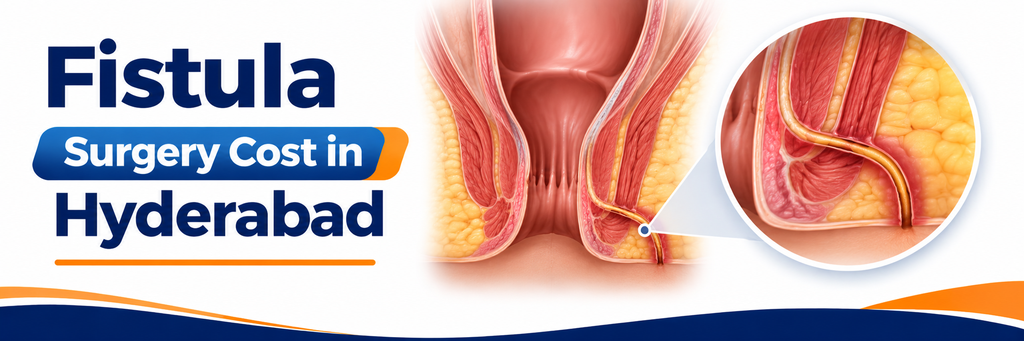
An anal fistula is a small tunnel that forms between the inside of the anal canal and the skin near the anus. It usually starts when a small gland inside the anal canal gets infected and forms an abscess, a pocket of pus. If the abscess drains but the tunnel it made stays open, it becomes a fistula. Pus, blood or fluid then leaks from a small opening in the skin, and the infection can flare up again and again.
The word "fistula" is also used for other connections in the body. This page is about the anal fistula. The fistula made in the arm for kidney dialysis is a different thing, and it is explained further down.
What causes an anal fistula?
- An anal abscess that did not heal completely. This is the most common cause.
- Crohn's disease, a long-term inflammation of the bowel
- An earlier operation or injury near the anus
- Less often, other infections or inflammation
Symptoms of an anal fistula
- A small opening near the anus that keeps leaking pus, blood or fluid
- Pain and swelling near the anus that come and go, and that often ease when the pus drains
- Itching and irritation of the skin around the anus
- Pain when sitting, or when passing stool
- Fever, when the infection flares up
Simple and complex fistulas
- A simple (low) fistula has one short tract, and passes through only a small part of the muscle around the anus.
- A complex fistula is a high fistula that passes through more of the muscle, one with several branches, one that has come back after earlier surgery, or one linked to Crohn's disease.
This matters because the muscles around the anus control your bowels. A simple fistula is usually easier to treat. A complex fistula needs a technique that heals it without damaging those muscles, and sometimes more than one operation.
When is an anal fistula an emergency?
Go to the nearest emergency department, or call +91 955 955 1 955, if you have:
- Severe pain and swelling near the anus, with fever or chills
- A hard, hot, red swelling near the anus
- Being unable to pass urine or stool
These can mean an abscess that needs urgent draining.
Can a fistula heal without surgery?
An anal fistula almost never heals on its own, because the tunnel keeps being fed by infection. Antibiotics can calm an infection, but they do not close the tunnel. Surgery is the way to heal it. Your surgeon decides when and how.
How is an anal fistula diagnosed?
Your surgeon examines the area, asks about your symptoms, and may look inside the anal canal with a small instrument. For a complex or recurrent fistula, an MRI scan or an ultrasound can map the tunnels. Your surgeon will tell you which tests you need.
Types of fistula surgery
Your surgeon chooses the technique by how simple or complex your fistula is. The aim is always to heal the fistula completely while protecting the muscles that control your bowels.
- Fistulotomy or fistulectomy: the tract is opened up, or cut out, so that it heals from the inside out. It suits many simple fistulas.
- Seton placement: a soft thread or rubber band is passed through the tract to keep it draining. It is used for some high or complex fistulas, sometimes before a final repair.
- Advancement flap surgery: the inner opening is closed with a flap of healthy tissue. It is used for some complex or recurrent fistulas.
- LIFT: the tract is tied off and divided between the muscles, a way of closing a fistula without cutting the muscle.
- Laser closure: a thin laser fibre is passed into the tract to seal it from the inside. It may cause less damage to the surrounding tissue, but it does not suit every fistula.
At Wellness Hospitals, fistulectomy for an anal fistula costs ₹61,000 to ₹80,000. Please ask our advisor which technique your estimate covers, and the price of the others.
What is a seton?
A seton is a soft thread or rubber band passed through the fistula tract. It keeps the tract draining, lets the infection settle, and in some cases slowly opens the tract without cutting the muscle all at once. It is used for some high or complex fistulas, and a final repair may follow later.
Is a fistula different from piles and a fissure?
Yes. These three anal problems are often confused:
- A fistula is a tunnel that leaks pus near the anus.
- Piles are swollen veins inside or around the anus, which cause bleeding or lumps.
- A fissure is a small tear in the lining of the anal canal, which causes sharp pain with stool.
A surgeon decides which problem you have, because each is treated differently.
Anal fistula or dialysis (AV) fistula?
An anal fistula is an unwanted tunnel near the anus. A dialysis fistula, also called an AV fistula, is a connection that a surgeon makes on purpose between an artery and a vein in the arm, so that blood can be taken out and returned during kidney dialysis. They are different problems, treated by different surgeons. The price on this page is for the anal fistula. For dialysis fistula surgery, please ask our advisor.
How to prepare for fistula surgery
- Follow the instructions you are given about when to stop eating and drinking
- Tell your doctor about all your medicines, especially blood thinners and diabetes medicines. Do not stop any medicine unless you are told to.
- Tell the team about allergies, Crohn's disease, earlier anal surgery and other health conditions
- You may be asked to use an enema, or take a laxative, the evening before
- Bring your scans and reports, insurance details and a photo ID, and bring a family member
How is fistula surgery done?
- Anaesthesia. You are given spinal or general anaesthesia, as your team advises.
- Finding the tract. The surgeon finds the fistula, from the opening in the skin to the opening inside the anal canal.
- The repair. The surgeon opens, removes, drains, closes or seals the tract, using the technique that suits your fistula.
- Dressing. A dressing is placed, and the wound is often left open to heal from the inside.
- Recovery. You are watched as you wake up.
Your surgeon will explain the plan for your case.
How long is fistula surgery, and is it major surgery?
A simple fistula operation often takes about half an hour to an hour. A complex fistula takes longer. You are under anaesthesia either way. A simple fistula operation is a smaller operation, and is often done as day care, so you go home the same day. A complex fistula may need a short hospital stay or more than one operation. Your surgeon will tell you which applies to you.
How painful is fistula surgery?
You feel no pain during the operation, because you are under anaesthesia. Afterwards there is soreness around the wound, especially when you pass stool, and it is usually worst for the first few days. Pain relief, stool softeners and warm sitz baths help, and it eases as the wound heals.
Recovery after fistula surgery
Recovery differs for each person and each technique. This is a general guide, and your surgeon will tell you what applies to you.
| When | What to expect |
|---|---|
| Day of the operation | You wake up with a dressing in place, and some soreness. Many people go home the same day. |
| First week | Soreness and some discharge from the wound. Take your medicines, sit in warm water a few times a day, and keep stools soft. |
| Weeks 1 to 2 | Many people return to desk work. The wound keeps draining a little and starts to shrink. |
| Weeks 3 to 6 | The wound heals more fully. Your surgeon checks it and tells you when you can return to heavy work and exercise. |
After fistula surgery: care
- Sit in warm water (a sitz bath) a few times a day, and after each bowel movement
- Keep the area clean and dry, and use a pad if there is discharge
- Eat fibre and drink plenty of fluids, to keep stools soft and avoid straining
- Take your medicines as prescribed
- Avoid heavy lifting and long periods of sitting until your surgeon allows it
- Keep your follow-up visits
Risks of fistula surgery
Fistula surgery is common and generally safe, but every operation has risks. They include pain, bleeding, infection, delayed healing, difficulty passing urine for a short time, the fistula coming back, and, mainly with high or complex fistulas, some loss of bowel control. The surgeon plans the operation to protect the muscles that control your bowels. Your surgeon will explain the risks that apply to you.
Can a fistula be removed permanently?
Surgery cures most anal fistulas for good, especially simple ones. But a fistula can come back, particularly if it is complex or linked to a condition such as Crohn's disease, and it then needs more treatment. Your surgeon will talk to you about your own chance.
When to call your doctor after surgery
- Fever or chills
- Increasing pain, or swelling near the wound
- Heavy bleeding, or passing clots
- Being unable to pass urine or stool
- A wound that does not seem to be healing
In an emergency, go to the nearest emergency department.
Fistula surgery cost with insurance and cashless cover
Many health insurance policies cover fistula surgery when it is medically needed, subject to your policy terms and waiting periods. Check them before you plan.
Wellness Hospitals offers cashless treatment where your policy or scheme covers it, with an insurance helpdesk available 24/7. Call +91 955 955 1 955 (Sangareddy branch: +91 955 955 1 500). Cashless approval is decided by your insurer, and any amount not approved is payable by the patient or family. See how cashless treatment at Wellness Hospitals works.
Get an estimate
Call +91 955 955 1 955 to speak to our team or book a consultation. Bring your reports, and your insurance details.