Craniotomy Surgery Cost in Hyderabad
Craniotomy cost at a glance
- Simple craniotomy or biopsy-type procedure: ₹1,50,000 – ₹2,50,000
- Craniotomy for tumour or haematoma: ₹2,20,000 – ₹4,00,000
- Complex craniotomy with advanced support: ₹3,50,000 – ₹5,50,000
- Emergency or prolonged ICU care: may cost more, depending on the condition
- Specialised approaches such as awake or complex skull base surgery can cost up to ₹8,00,000 (see the table by approach)
What decides the price
- Reason for surgery and its position in the brain: removing a simple blood clot is different from operating on a deep tumour or a blood vessel problem
- Emergency or planned surgery: emergency cases often need more care
- Surgical approach and equipment: a microscope, navigation or special monitoring can add to the cost
- ICU stay, room and length of stay: longer ICU care adds to the bill
Craniotomy cost in Hyderabad by type of case
| Type of case | Price | What it usually means |
|---|---|---|
| Simple craniotomy or biopsy-type procedure | ₹1,50,000 – ₹2,50,000 | Taking a tissue sample, or a smaller and less complex operation |
| Craniotomy for tumour or haematoma | ₹2,20,000 – ₹4,00,000 | Removing a brain tumour or a collection of blood (haematoma) |
| Complex craniotomy with advanced support | ₹3,50,000 – ₹5,50,000 | Deep or difficult problems that need advanced equipment and monitoring |
| Emergency or prolonged ICU care | May cost more | Depends on the condition and the care needed |
*Approximate costs. The final cost may vary for each patient.
Craniotomy cost in Hyderabad by surgical approach
The table above is by the reason for surgery. This table is by the surgical approach. Your estimate depends on both, and your neurosurgeon will explain which applies to you.
| Surgical approach | Price | What it involves |
|---|---|---|
| Standard (conventional) craniotomy | ₹2,50,000 – ₹4,50,000 | A section of skull is lifted to reach the brain, then put back |
| Keyhole or minimally invasive craniotomy | ₹3,00,000 – ₹5,50,000 | A very small opening and specialised instruments |
| Stereotactic or image-guided craniotomy | ₹3,50,000 – ₹6,00,000 | Scan-based computer guidance to reach a precise target |
| Awake craniotomy | ₹4,50,000 – ₹8,00,000 | The patient is awake for part of the surgery so speech and movement can be checked |
| Endoscopic craniotomy | ₹3,00,000 – ₹5,50,000 | A thin camera is passed through a small opening |
| Skull base craniotomy | ₹3,50,000 – ₹6,50,000 | Reaching tumours at the base of the skull, near nerves and blood vessels |
| Frontal craniotomy | ₹2,50,000 – ₹5,00,000 | An opening over the front of the brain |
| Temporal craniotomy | ₹2,50,000 – ₹5,00,000 | An opening at the side of the head, near the temple |
| Parietal craniotomy | ₹2,50,000 – ₹5,00,000 | An opening over the upper back of the head |
| Occipital craniotomy | ₹2,50,000 – ₹5,00,000 | An opening at the back of the head |
| Suboccipital craniotomy | ₹3,00,000 – ₹6,00,000 | An opening low at the back of the skull, to reach the cerebellum and brainstem |
| Pterional craniotomy | ₹3,50,000 – ₹6,50,000 | An opening near the temple where several skull bones meet, used for aneurysms and tumours |
| Orbital or supraorbital craniotomy | ₹3,00,000 – ₹6,00,000 | A small cut above the eyebrow to reach the front of the brain or skull base |
| Bi-frontal craniotomy | ₹3,50,000 – ₹6,50,000 | An opening across both sides of the forehead |
| Extended or complex skull base craniotomy | ₹4,00,000 – ₹8,00,000 | Large or deep skull base tumours, sometimes moving several bones |
*Approximate costs. The final cost may vary for each patient.
Please note: the prices above are a guide, not a fixed quote. Where your price falls within a range depends on factors such as your diagnosis, the position and size of the problem, whether surgery is planned or an emergency, the approach and equipment used, any implants or devices, your ICU and room needs, the length of your stay, and your overall health. Your final bill may differ if extra tests, medicines, blood products, ICU care, days in hospital or other care are needed. If your neurosurgeon changes the plan after evaluation, the cost will be decided accordingly. Room categories are offered according to your choice and availability. Please contact our advisor when you ask for an estimate.
What affects the cost of craniotomy surgery?
Diagnosis. A brain tumour, a blood clot, an abscess, an aneurysm and a head injury are different operations with different risks.
Position and complexity. A problem near the surface is simpler than one deep in the brain or at the base of the skull. Complex cases take longer and need more equipment.
Emergency or planned surgery. Emergency surgery for a bleed or a severe head injury starts at once and often needs ventilator support and a longer ICU stay.
Approach and equipment. A microscope, computer navigation, an endoscope or monitoring of brain function during surgery can add to the cost.
Implants and devices. Plates, mesh or other devices used to secure the skull or repair the brain's covering are billed according to what is used.
ICU, ventilator and room. Most patients are monitored in the ICU after surgery. Ventilator support and each extra ICU day add to the bill.
Tests and imaging. CT and MRI scans, blood tests and sometimes angiography help plan the surgery, and scans are repeated afterwards.
Surgeon, anaesthesia, theatre and blood products. The neurosurgeon's team, anaesthesia, operation theatre use and any blood or blood products are part of the bill.
Medicines and consumables. Antibiotics, anti-seizure medicines, steroids, pain relief and supplies are charged as used.
Recovery care. Physiotherapy, speech therapy and rehabilitation, and follow-up visits and scans, add to the cost after discharge.
Your overall health. Diabetes, heart, kidney or lung problems may mean extra tests, specialist input or a longer stay.
The full cost of brain surgery
When you plan your budget, look beyond the surgery price:
- Tests and scans. Ask which are included in your estimate and which are billed separately.
- ICU days. Ask how many ICU days the estimate assumes, and what an extra day costs.
- Implants and blood products. Ask how they are billed.
- Medicines. Ask which are included.
- Rehabilitation. Physiotherapy and speech therapy may be needed for weeks or months.
- Follow-up scans and visits. Ask whether they are included.
- Insurance limits. Check your policy's room-rent limit, waiting period and any limits on implants before you choose a room.
What is a craniotomy?
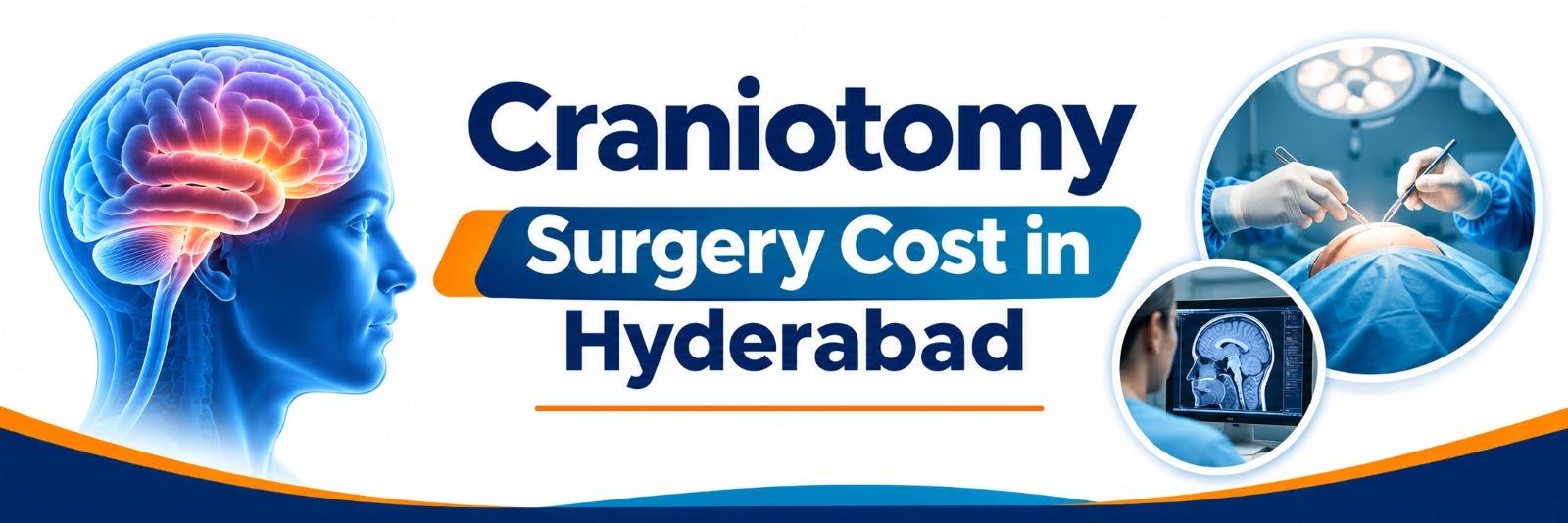
A craniotomy is brain surgery in which a section of the skull bone is lifted temporarily so the surgeon can reach the brain. When the operation is finished, the bone is usually put back and fixed in place. It may be done to remove a tumour or a blood clot, to treat an infection or a blood vessel problem, or to relieve pressure on the brain.
The brain controls movement, speech, memory, emotion and many vital functions, so brain surgery needs careful planning. Every step is planned in advance, from scans and tests before surgery to the final closure of the skull, and a team of neurosurgeons, anaesthetists, nurses and rehabilitation staff looks after the patient.
Who needs a craniotomy?
Not everyone with a brain condition needs a craniotomy. The decision depends on how serious the problem is, where it is, your overall health and how you respond to other treatments. A craniotomy may be advised for:
- Brain tumours, cancerous or not, especially when they cause pressure or other symptoms
- Cancer that has spread to the brain, to remove a tumour and relieve pressure
- Skull base tumours, which need a specialised approach because they sit deep and close to nerves and blood vessels
- Bleeding inside the brain, where removing the collected blood can reduce dangerous pressure
- Subdural and epidural haematomas, which are collections of blood around the brain, often after a head injury
- Brain aneurysms, where a weak blood vessel wall may need to be clipped
- Arteriovenous malformations and cavernous malformations, which are abnormal clusters of blood vessels that can bleed
- Severe head injury, to remove clots, relieve pressure and repair damage
- Skull fractures that press on the brain
- Raised pressure inside the skull, when swelling becomes dangerous
- Seizures that medicines cannot control, when surgery can remove the area that causes them
- Brain abscess, a collection of pus that may need drainage
- Chiari malformation, where surgery can make more room at the base of the skull
- Cerebrospinal fluid (CSF) leak, which may need surgical repair
When is a head problem an emergency?
Go to the nearest emergency department, or call +91 955 955 1 955, after a head injury, or if you have:
- A sudden, severe headache
- A seizure
- Confusion, or drowsiness that is getting worse
- Weakness or numbness on one side of the body
- Difficulty speaking or seeing
- Repeated vomiting
- Loss of consciousness
A bleed or a build-up of pressure in the brain needs urgent treatment.
Other treatments for brain conditions
Surgery is not the only option. Depending on the condition, your neurosurgeon may consider:
- Medicines for some tumours, infections, seizures and swelling
- Radiation therapy to shrink or destroy some tumours without opening the skull
- Stereotactic radiosurgery, which delivers focused radiation without a cut
- Endovascular procedures, such as coiling or embolisation, which treat some aneurysms and blood vessel problems through a catheter in the groin or wrist
- Endoscopic brain surgery, which uses a thin camera through a small opening
- Regular scans and observation for small, slow-growing or symptom-free problems
- Deep brain stimulation for some movement disorders
Your neurosurgeon will advise which option is right for you.
Types of craniotomy
Craniotomies are named either by the approach used or by the part of the skull that is opened.
By approach
- Standard (conventional) craniotomy: a section of skull is lifted to reach the brain. It is used to remove tumours, repair blood vessels and treat bleeding and injury.
- Keyhole or minimally invasive craniotomy: a very small opening and specialised instruments cause less damage to nearby tissue, and may mean less pain, smaller scars and quicker recovery.
- Stereotactic or image-guided craniotomy: scan-based computer guidance leads the surgeon to a precise target, which helps with deep or complex problems.
- Awake craniotomy: the patient is awake for part of the surgery so the team can check speech, movement and other functions, which helps protect important areas.
- Endoscopic craniotomy: a thin camera passed through a small opening shows deep structures on a screen, so smaller cuts can be used.
- Skull base craniotomy: used to reach tumours or problems at the base of the skull, close to nerves and major blood vessels.
By the part of the skull opened
- Frontal: the front of the brain, for tumours, infection or injury
- Temporal: the side of the head near the temple, for problems affecting memory and hearing areas, including some epilepsy surgery
- Parietal: the upper back of the head, for tumours, blood vessel problems and injuries
- Occipital: the back of the head, for problems that affect vision
- Suboccipital: low at the back of the skull, to reach the cerebellum and brainstem
- Pterional: near the temple, where several skull bones meet, giving a wide view for aneurysms and tumours
- Orbital or supraorbital: a small cut above the eyebrow to reach the front of the brain or skull base
- Bi-frontal: both sides of the forehead, for large tumours or problems in the frontal lobes
- Extended or complex skull base: for large or deep skull base tumours, sometimes moving several bones
How is a craniotomy done?
- Planning. Your team reviews your scans and plans the safest route to the problem.
- Anaesthesia. You are given general anaesthesia. In an awake craniotomy, you are awake for part of the operation.
- Opening. A small section of skull bone is lifted, and the protective covering of the brain is opened.
- Treatment. The surgeon removes the tumour or clot, repairs the blood vessel, drains the abscess or relieves the pressure, often using a microscope and other equipment.
- Closing. The covering of the brain is closed, the bone is put back and fixed, and the skin is closed.
Your neurosurgeon will explain the plan for your case.
How to prepare for a craniotomy
- Follow the instructions you are given about when to stop eating and drinking
- Tell your doctor about all your medicines, especially blood thinners, anti-seizure medicines and diabetes medicines
- Tell the team about allergies and other health conditions
- Bring your CT and MRI scans, reports, insurance details and a photo ID
- Plan for a family member or attendant to stay with you
- Ask what to expect in the ICU and afterwards
Recovery after a craniotomy
After surgery, patients are usually monitored in the ICU, often for the first day or two, so the team can watch brain function, vital signs and neurological status. How long you stay in hospital depends on your condition, and can range from several days to longer.
- Pain and headache are treated with medicines
- The wound is kept clean and dry, and dressings are checked regularly
- You may be given antibiotics to prevent infection, anti-seizure medicines to lower the risk of seizures, and steroids to control swelling
- You may be advised to keep your head slightly raised
- Avoid heavy lifting, bending and straining until your doctor says it is safe
- Gentle walking is encouraged after a few days, as advised
- The team checks speech, memory, coordination and movement
- A balanced diet with enough protein, fruit and vegetables supports healing
- Follow-up visits and scans, such as CT or MRI, check your recovery
- You may need physiotherapy, speech therapy or occupational therapy to regain strength and function
Possible risks and complications
A craniotomy is a well-established operation, but every brain operation carries risks. Possible problems include bleeding, infection, swelling of the brain, seizures, a leak of brain fluid, changes in strength, speech, vision or memory, a blood clot in the legs or lungs, and a reaction to anaesthesia. Your neurosurgeon will explain the risks that apply to you before surgery.
When to call your doctor after surgery
- A severe or worsening headache
- Fever or chills
- A seizure
- New weakness, numbness or confusion
- Redness, swelling or fluid leaking from the wound
- Repeated vomiting
In an emergency, go to the nearest emergency department.
Craniotomy cost with insurance and cashless cover
Coverage for brain surgery depends on medical need, your policy terms, waiting periods, exclusions, room limits and limits on implants. Check them before you plan.
Wellness Hospitals offers cashless treatment where your policy or scheme covers it, with an insurance helpdesk available 24/7. Call +91 955 955 1 955 (Sangareddy branch: +91 955 955 1 500). Cashless approval is decided by your insurer, and any amount not approved is payable by the patient or family. See how cashless treatment at Wellness Hospitals works.
What Wellness Hospitals offers for neurosurgery
Neurosurgery evaluation and imaging review, ICU-backed surgical care, guidance on the estimate, and insurance and cashless support where they apply.
Our neurosurgeon
Please contact our advisor to check doctor availability at your preferred branch.
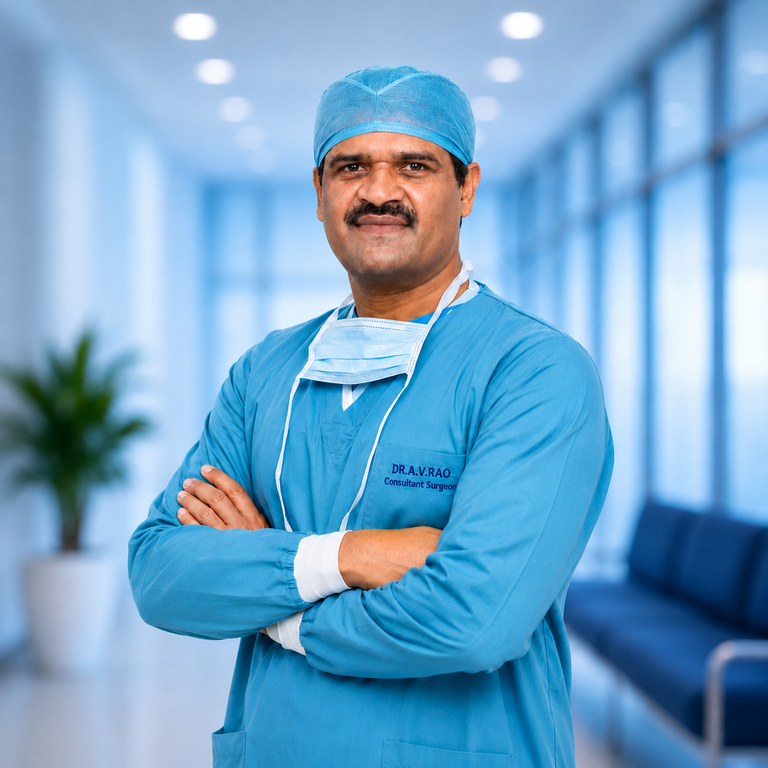
- Dr. A. Venkateshwar Rao, MBBS, DNB (General Surgery), MCh (Neurosurgery), 22 years of experience. Brain tumour surgery, spine surgery and spinal disorders, and neurotrauma and emergency neurosurgery.
Get an estimate
Call +91 955 955 1 955 to speak to our team or book a consultation. Bring your scans and other reports, and your insurance details.