Coronary Angiography Cost in Hyderabad
If your doctor has advised an angiogram, you probably want two things: to know what it costs, and to know what it involves. This page gives you the price at Wellness Hospitals, explains what can change the bill, and walks you through the test, the risks, the recovery and what the results can lead to.
Angiogram cost at a glance
- Coronary angiogram (day care): ₹15,000
- If a blockage needs angioplasty: ₹1,60,000 – ₹2,10,000, stent extra
- If bypass surgery is advised: ₹2,67,000 – ₹3,50,000, balloon pump (IABP) extra if needed
- CT coronary angiogram, and peripheral or cerebral angiogram: ₹15,000 – ₹20,000 each
What decides the price
- Type of angiogram: a catheter angiogram of the heart and a CT scan of the arteries are different tests
- Extra tests: blood tests, an ECG or an echo, if your doctor needs them
- Day care or a longer stay
- Treatment in the same sitting: if a blockage is found and treated, that is billed as angioplasty
Coronary angiography cost at Wellness Hospitals
| Procedure | Price | Note |
|---|---|---|
| Coronary angiogram (day care) | ₹15,000 | |
| CT coronary angiogram | ₹15,000 – ₹20,000 | A different test, priced separately |
| Peripheral or cerebral angiogram | ₹15,000 – ₹20,000 | For each of the two |
*Approximate costs. The final cost may vary for each patient.
Please note: the price above is a guide, not a fixed quote. Your final bill depends on your condition, any tests you need before or after the angiogram, whether you stay longer than a day, any other health conditions, and whether a blockage is found and treated. If your cardiologist changes the plan, the cost will be decided accordingly. Please contact our advisor when you ask for an estimate, and ask for it in writing.
What an angiogram can lead to
An angiogram is a test, and it does not clear a blockage. If it shows one, your cardiologist will talk you through the options, which may include medicines, angioplasty or bypass surgery. These are the related prices at Wellness Hospitals.
| Procedure | Price | Note |
|---|---|---|
| Coronary angioplasty (PTCA) | ₹1,60,000 – ₹2,10,000 | Stent extra |
| Primary angioplasty (during a heart attack) | ₹1,90,000 – ₹2,40,000 | Stent extra |
| Coronary artery bypass grafting (CABG) | ₹2,67,000 – ₹3,50,000 | IABP extra, if needed |
| EPS or RFA study with mapping | ₹1,75,000 – ₹2,35,000 | |
| Permanent pacemaker implantation | ₹91,000 – ₹1,20,000 | Pacemaker device extra |
*Approximate costs. The final cost may vary for each patient.
Read more in our guides to angioplasty cost in Hyderabad and CABG surgery cost in Hyderabad.
What affects the cost of a coronary angiogram?
Type of angiogram. A catheter angiogram, where a thin tube is passed to the heart, and a CT angiogram, which is a scan, are different tests and are priced separately.
Day care or a longer stay. Most angiograms are done as day care. If you need to stay longer, the bill changes.
Tests before and after. Blood tests such as kidney function, an ECG or an echo may be needed. Ask which are included in your estimate.
Consultation. Your cardiologist's consultation before the test may be billed separately.
Treatment in the same sitting. If a blockage is found and your cardiologist treats it then and there, the procedure is billed as angioplasty, not as an angiogram.
Other health conditions. Kidney problems, diabetes or an allergy to the dye may mean extra tests or care.
Insurance. The terms and limits of your policy decide how much your insurer pays, and you pay any amount that is not covered.
The full cost of an angiogram
When you plan your budget, look beyond the test price:
- Consultation. Ask whether your cardiologist's visit is included.
- Blood tests, ECG and echo. Ask which are included.
- Observation after the test. Ask what the estimate assumes.
- Medicines. Ask which are included, and plan for any you need afterwards.
- Treatment if a blockage is found. Angioplasty or bypass surgery is billed separately.
- Insurance limits. Check your waiting period and any limits in your policy.
What is coronary angiography?
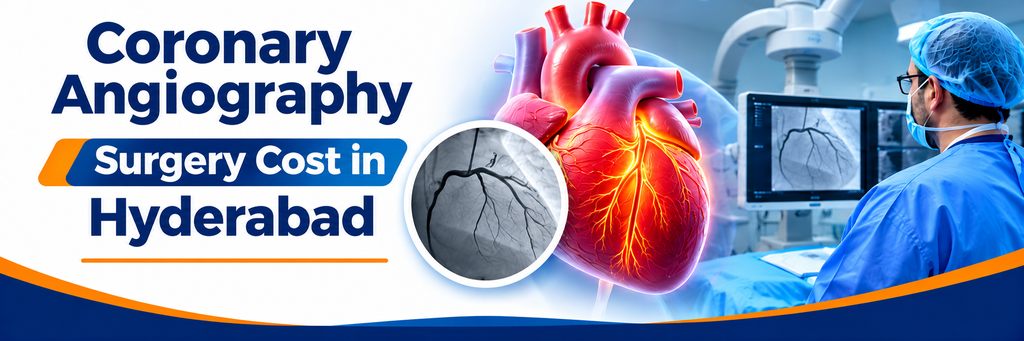
Coronary angiography, also called a coronary angiogram or heart angiography, is a test that shows the inside of the coronary arteries, the vessels that bring blood to your heart muscle. A thin tube (catheter) is passed to the heart, a special dye is injected, and X-ray images show whether any artery is narrowed or blocked, and where. It can also be done together with a check of the pressures inside the heart chambers.
It is a test, not a treatment. It shows your cardiologist what is going on, so the right treatment can be chosen.
Why is a coronary angiogram done?
Your cardiologist may advise one if you have:
- Chest pain or pressure, especially with effort
- Breathlessness or unusual tiredness
- Palpitations, or an irregular heartbeat
- An abnormal ECG, echo or stress test
- A heart attack, or signs that one may be coming
- A planned heart operation, such as a valve operation, where the arteries need to be checked first
The test shows how well blood is flowing, whether an artery is narrowed, and how severe and where the narrowing is. That helps your cardiologist decide between medicines, angioplasty and bypass surgery.
Chest pain: when is it an emergency?
Call for emergency help, or go to the nearest emergency department, if you have chest pain or pressure that lasts more than a few minutes, spreads to the arm, jaw or back, or comes with sweating, breathlessness, nausea or fainting. Call +91 955 955 1 955. Do not drive yourself.
Catheter angiogram vs CT angiogram
| Catheter (coronary) angiogram | CT coronary angiogram | |
|---|---|---|
| What it is | A thin tube is passed to the heart through an artery in the wrist or groin, and dye is injected | A CT scan of the heart after dye is injected into a vein in the arm |
| Can it treat a blockage? | It can lead straight to treatment if your cardiologist decides it is needed | No, it only takes pictures |
| Cost at Wellness Hospitals | ₹15,000 (day care) | ₹15,000 – ₹20,000 |
*Approximate costs. The final cost may vary for each patient.
Your cardiologist advises which test is right for you.
How to prepare for an angiogram
- Follow the instructions you are given about when to stop eating and drinking
- Tell your doctor about all your medicines, especially blood thinners and diabetes medicines. Do not stop any medicine unless you are told to.
- Tell the team about any allergy, especially to dye, iodine or seafood, and about kidney problems
- Bring your ECG, echo and other reports, insurance details and a photo ID
- Bring a family member, because you may not be able to go home alone
How is a coronary angiogram done?
- Preparation. You lie on a table, a drip is started, and the skin over the wrist or groin is numbed.
- Catheter. A thin tube is passed through the artery to the heart. You may feel pressure, but not pain.
- Dye. A contrast dye is injected through the tube. You may feel a warm flush for a few seconds.
- Images. X-ray pictures show the coronary arteries and any narrowing.
- Finish. The tube is removed, and the puncture site is closed and covered.
The test itself often takes about half an hour, plus time for preparation and for rest afterwards. You are awake throughout, and your team talks you through it.
Is an angiogram painful?
Most people feel pressure, not pain. The skin is numbed first, and you may feel a warm flush when the dye goes in. Some people feel a little nervous, and your team will help you stay comfortable.
Is heart angiography risky?
Coronary angiography is widely used and is generally safe, but every procedure has risks. They include bleeding or a bruise where the catheter goes in, an allergic reaction to the dye, strain on the kidneys from the dye, an irregular heartbeat and, rarely, a heart attack, a stroke or injury to an artery. Your cardiologist will explain the risks that apply to you.
After the angiogram
- You rest for a few hours while the puncture site is watched
- The small puncture in the artery usually seals within hours to a day
- Drink plenty of fluids, unless your doctor says otherwise, to help clear the dye
- Avoid heavy lifting and strenuous activity for the time your team advises
- Watch the wrist or groin for swelling, bleeding or severe pain
- Take your medicines as advised, and do not stop them without asking your cardiologist
When to call your doctor after an angiogram
- Swelling, bleeding or a growing lump at the puncture site
- Severe pain, or a cold, pale or numb hand or leg
- Chest pain or breathlessness
- Fever or chills
- Fainting or dizziness
In an emergency, go to the nearest emergency department.
What do the results mean?
Your cardiologist explains the pictures. If the arteries are clear or only mildly narrowed, you may need medicines and lifestyle changes. If an artery is badly narrowed, you may be advised angioplasty, which opens the artery with a balloon and a stent, or bypass surgery, which makes new routes for blood around the blockage. Sometimes your cardiologist treats a blockage in the same sitting. The decision is made for you as an individual.
Angiogram cost with insurance and cashless cover
Many health insurance policies cover a coronary angiogram when it is medically needed, subject to your policy terms and waiting periods. Check them before you plan.
Wellness Hospitals offers cashless treatment where your policy or scheme covers it, with an insurance helpdesk available 24/7. Call +91 955 955 1 955 (Sangareddy branch: +91 955 955 1 500). Cashless approval is decided by your insurer, and any amount not approved is payable by the patient or family. See how cashless treatment at Wellness Hospitals works.
Get an estimate
Call +91 955 955 1 955 to speak to our team or book a consultation. Bring your ECG, echo and other reports, and your insurance details.